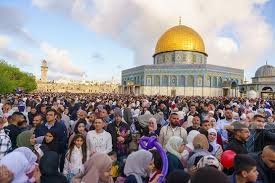
Salat al-Eid, or the Eid prayer, is a deeply significant communal prayer observed by Muslims worldwide during the joyous occasions of Eid al-Fitr (the festival of breaking the fast) and Eid al-Adha (the festival of sacrifice). Unlike daily prayers, Salat al-Eid is not obligatory but highly recommended, offering a unique opportunity for Muslims to gather, express gratitude to Allah, and strengthen community bonds.
Understanding the Significance of Eid Prayer
The Eid prayer is a sunnah mu’akkadah – a strongly recommended practice of the Prophet Muhammad (peace be upon him). It’s a public declaration of faith and a celebration of Allah’s blessings. Performing Salat al-Eid allows Muslims to collectively thank Allah for enabling them to fulfill the obligations of Ramadan (in the case of Eid al-Fitr) or for the willingness to sacrifice, mirroring the example of Prophet Ibrahim (Abraham) (in the case of Eid al-Adha). It’s a time for reflection, spiritual renewal, and fostering unity within the Muslim community.
When is Salat al-Eid Performed?
Salat al-Eid is performed after sunrise on the day of Eid. The exact timing can vary slightly depending on local customs and the rulings of Islamic scholars. Generally, it’s recommended to perform the prayer relatively soon after sunrise, allowing ample time for the festivities to begin. It’s crucial to check with your local mosque or Islamic center for the specific time in your area. The prayer is performed in an open space (Eidgah) if available, symbolizing the communal nature of the celebration. If an Eidgah isn’t accessible, it can be performed in the mosque.
How to Perform Salat al-Eid: A Step-by-Step Guide
Salat al-Eid differs slightly from the regular five daily prayers. Here’s a breakdown of the steps:
- Niyyah (Intention): Make the intention in your heart to perform Salat al-Eid.
- Takbirat al-Ihram: Begin with the opening Takbir (saying “Allahu Akbar”) to enter into prayer, similar to Fajr prayer.
- Additional Takbirat: After the initial Takbir, there are usually six or eleven additional Takbirat performed before reciting Surah al-Fatiha. The number varies based on different schools of thought.
- Recitation of the Quran: After the Takbirat, the Imam (prayer leader) recites Surah al-Fatiha followed by another Surah, typically Surah al-A’la for Eid al-Fitr and Surah al-Qadr for Eid al-Adha.
- Ruku & Sujud: Perform Ruku (bowing) and Sujud (prostration) as in regular prayers.
- Second Rak’ah: Stand up for the second Rak’ah, perform five Takbirat (without raising hands this time), recite Surah al-Fatiha and another Surah.
- Final Tashahhud & Salam: Complete the prayer with Tashahhud (testimony of faith) and Salam (greetings of peace).
The Khutbah (Sermon)
Following the Salat al-Eid, an Imam delivers a Khutbah (sermon) that focuses on the significance of Eid, Islamic teachings, and current events relevant to the Muslim community. The Khutbah serves as a reminder of Allah’s blessings and encourages Muslims to live righteous lives. Listening to the Khutbah is considered an integral part of the Eid celebration.
Resources for Further Learning
For more detailed information on Salat al-Eid, you can consult the following resources:
- Islamic Relief USA – Eid Prayer Guide
- Muslim Matters – Understanding the Eid Prayer
- Al-Islam.org – Salat al-Eid
May Allah accept our prayers and grant us all a blessed Eid!