
Yair Lapid Sounds the Alarm: The High Stakes of the US-Iran Deal and the Battle for Israel’s Leadership
In a striking critique of current diplomatic efforts, Israeli opposition leader Yair Lapid has voiced severe concerns regarding the emerging deal between the United States and Iran. Speaking in Jerusalem, Lapid described the negotiations as “disturbing,” arguing that the agreement fails to secure Israel’s core strategic goals and leaves the region vulnerable.
A “Disturbing” Deal: Why Yair Lapid is Concerned
The crux of Lapid’s frustration lies in the perceived lack of influence the current Israeli administration holds over Washington. According to Lapid, the proposed terms—where Iran would surrender highly enriched uranium and reopen the Strait of Hormuz in exchange for the lifting of US sanctions—do not sufficiently address the threats posed by ballistic missiles or Iranian-backed proxy groups.
Lapid didn’t hold back in his critique of Prime Minister Benjamin Netanyahu, stating that the Israeli government’s ability to sway decisions in the US is at an “all-time low.” In a bold assertion of national pride, Lapid remarked, “Israel is a sovereign state, we are not a vassal state and we are not a protectorate.”
The Power Play: The Lapid-Bennett Alliance
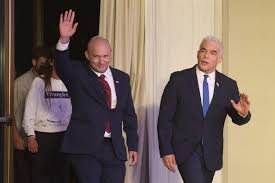
Beyond the diplomatic tension, a significant political earthquake is occurring within Israel. Yair Lapid and former Prime Minister Naftali Bennett have officially merged their parties into a single faction. This strategic alliance is a direct attempt to unseat Benjamin Netanyahu in the upcoming elections scheduled for late October.
This partnership mirrors their previous successful coalition that briefly ended Netanyahu’s long-term rule. By uniting a fragmented opposition, Lapid and Bennett hope to present a cohesive alternative to the current government.
Shifting Paradigms on Palestine and Coalitions
The political landscape has shifted drastically since the trauma of the October 7 attacks. Yair Lapid, once a proponent of Palestinian independence, has now adopted a more cautious stance. Key takeaways from his current position include:
- n
- The Two-State Solution: Lapid believes the conditions for a two-state solution are currently non-existent, fearing a future Palestinian state could become another “terrorist state” on Israel’s border.
- Annexation: Despite his skepticism toward a Palestinian state, Lapid has received assurances from Bennett that Israel will not move toward annexing occupied territories.
- Arab Political Parties: In a departure from his previous government, Lapid has ruled out cooperation with Arab parties to form a new coalition, citing the changed security environment of the region.
What’s Next for Israel?
As the October elections approach, the tension between the Lapid-Bennett alliance and the Netanyahu administration will likely intensify. The world is watching closely, as the outcome will not only determine the leadership of Israel but also its strategic approach to Middle East diplomacy and national security.
With polling suggesting a tight race, the ability of the opposition to unite without Arab lawmakers will be the ultimate test of Yair Lapid’s new political strategy.



