Xi Jinping’s Global Stage: Decoding the Shenzhen Summit with Trump and Putin
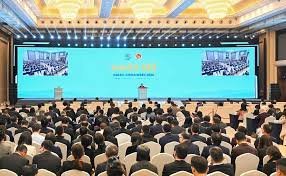
In the high-stakes world of international diplomacy, some meetings are about policy, while others are about perception. The recent tri-lateral summit in Shenzhen, bringing together the leaders of China, the United States, and Russia, falls squarely into the latter category. According to critical analyses from European media, the event was less of a diplomatic breakthrough and more of a carefully choreographed performance directed by one man: Xi Jinping.
The Director of the Drama: Xi Jinping’s Masterclass in Image
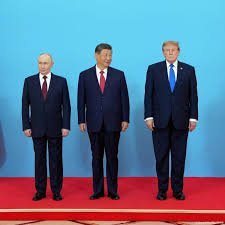
Reports from the Frankfurter Allgemeine Zeitung suggest that the Shenzhen summit followed a script written entirely by Beijing. While the images of Xi Jinping, Donald Trump, and Vladimir Putin standing side-by-side circulated globally, the narrative was clear: Xi was the protagonist, and the other two were merely supporting actors.
For Beijing, the principle of “summit diplomacy” is simple: maximize the grandeur, minimize the substance. By focusing on the visual spectacle, Xi Jinping successfully positioned himself as the gravitational center of global politics, projecting an image of leadership and stability to the rest of the world.
The ‘Peace Declaration’: Substance or Smoke and Mirrors?
The summit culminated in a “Peace Declaration,” but a closer look reveals that the document was largely a reflection of Beijing’s interests. Key points included:
- Oil Exports: A push to increase production, which directly benefits Russia’s desire to bypass Western sanctions.
- International Law: Calls to weaken the power of the International Criminal Court (ICC), a move that favors Vladimir Putin, who remains wanted by the court.
- UN Reform: A vague desire to reshape the international order without any intention of relinquishing the veto power held by China and Russia.
Notably, the topics that Xi Jinping wished to avoid—such as the war in Ukraine and nuclear disarmament—were completely scrubbed from the agenda, despite previous indications from Trump and Putin that these would be discussed.
Strategic Calculation: Using Trump and Putin
The analysis suggests that Beijing is playing a long game. By keeping Donald Trump “content” during his remaining term, China aims to buy time to strengthen its internal power and weaken the United States’ alliance network in Asia.
From Xi’s perspective, a conflict between the U.S. and Iran is a strategic win: it drains American military resources and keeps Washington’s focus far away from the Indo-Pacific. Meanwhile, by avoiding an overt alliance with Russia, China prevents further alienating European powers.
The Contrast: Shenzhen vs. Berlin
While the Shenzhen summit focused on photo-ops, a simultaneous meeting was taking place in Berlin. German Chancellor Merz gathered 40 international allies in a “Coalition of the Willing” to provide concrete aid to Ukraine.
This juxtaposition highlights the current divide in global diplomacy: one side focusing on the theatrics of power and the other on tangible security alliances. While the Shenzhen meeting provided a stunning “family photo” for the history books, it failed to produce a new world order.
Final Thoughts: A Performance, Not a Pivot
The Shenzhen summit serves as a reminder that in the modern era, the image of power can be as influential as power itself. However, as noted by security experts and political elites in the U.S., a bipartisan consensus is forming that views the authoritarian regime in Beijing as a primary adversary. The “glory show” may have looked impressive, but the cracks in the facade are beginning to show.
For further insights into global geopolitical shifts, you can explore the Deutsche Welle archives or the analysis provided by the Council on Foreign Relations.
📰 You May Also Like