
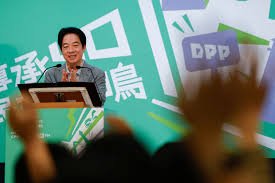
Will President Donald Trump’s Potential Dialogue with Taiwan Shift Global Power?
In the high-stakes world of international diplomacy, a single phone call can trigger a geopolitical earthquake. Recent indications suggest that President Donald Trump may be open to a direct conversation with Taiwan’s President Lai Ching-te, a move that would signal a seismic shift in United States foreign policy and potentially strain relations with Beijing to a breaking point.
A Bold Move in US-Taiwan Relations
Speaking to journalists aboard Air Force One, President Trump hinted at the possibility of engaging directly with the leader of Taiwan. The primary driver for this potential dialogue? U.S. arms sales. Trump noted that he needs to speak with the individual currently leading Taiwan to discuss the strategic provision of defensive weaponry.
For Taipei, this isn’t just a diplomatic courtesy—it’s a strategic victory. A high-ranking Taiwanese diplomat stated that Taiwan would “welcome” such discussions, viewing them as a rare opportunity to strengthen ties with the White House.
The China Factor: A Delicate Balance
The prospect of a direct line between the two presidents is fraught with risk. For the People’s Republic of China, Taiwan is an inseparable part of its territory. Any official recognition or direct high-level communication from the U.S. President is viewed by Beijing as a provocation.
- n
- Xi Jinping’s Warning: During a recent summit, President Xi Jinping issued a stern warning to President Trump regarding the risks of conflict over Taiwan.
- Conciliatory Tones: Conversely, Trump has also promised a “fabulous future” between the U.S. and China, illustrating the volatile “carrot and stick” approach to diplomacy.
The Legal Framework: The Taiwan Relations Act
The U.S. commitment to Taiwan is not arbitrary. It is rooted in the Taiwan Relations Act of 1979, which mandates that the United States provide Taiwan with the means to defend itself. However, this support is historically balanced against the condition that Taiwan does not formally declare independence.
While President Lai Ching-te has emphasized that national security is not a bargaining chip, there is lingering anxiety in Taipei. Trump’s suggestion that arms sales could be used as leverage in negotiations with China has created a sense of uncertainty among Taiwanese officials.
Historical Precedent and Future Outlook
This wouldn’t be the first time Trump disrupted diplomatic norms. Shortly after his 2016 election, he accepted a call from then-President Tsai Ing-wen, the first such interaction since 1979. This precedent suggests that Trump is willing to bypass traditional protocols to achieve his strategic or economic goals.
As the world watches, the question remains: will this potential dialogue lead to a new era of stability in the Taiwan Strait, or will it accelerate the collision course between the world’s two largest superpowers?



