
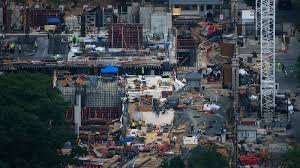
The Mystery Behind the White House State Ballroom Funding
A heated debate has ignited on Capitol Hill following reports that the administration quietly transferred nearly $400 million of taxpayer money into accounts designated for security at the White House. While the official narrative points toward critical infrastructure upgrades, critics are asking a pointed question: Is this money actually being used to construct the controversial White House state ballroom?
The financial movement, totaling approximately $397 million, was drawn from a larger $1.2 billion allocation intended for the U.S. Secret Service. This funding was originally approved by the GOP-controlled Congress under the “One Big Beautiful Bill Act.” However, the lack of detailed spending reports has left lawmakers skeptical about where the money is truly going.
Breaking Down the $397 Million Transfer
According to documents verified by the Office of Management and Budget (OMB), the funds were moved in two rounds during mid-June. The allocation is split into two primary categories:
- n
- Operations and Support: Nearly $11 million allocated for general agency functions.
- Procurement, Construction, and Improvements: A staggering $385 million dedicated to physical upgrades.
Private Donations vs. Public Funds
The core of the controversy lies in the funding source. The President has repeatedly asserted that the White House state ballroom would be financed through private donations. However, Senator Susan Collins (R-Maine) has voiced concerns, questioning whether federal funds are being diverted to cover the costs of a luxury project under the guise of “security upgrades.”
Adding fuel to the fire, a report from the Washington Post suggests that the total cost of the ballroom project could exceed $600 million—significantly higher than previous estimates. More alarmingly, the report indicates that more than half of this funding might come from government entities rather than private donors.
Security Shield or Architectural Luxury?
To justify the expenditure, the administration maintains that the ballroom is not merely for social events but is a strategic asset for the White House complex. A Justice Department official argued in a letter to the D.C. Circuit Court of Appeals that the structure’s mass and height would serve as a shield against potential attacks.
The administration claims the project will include high-tech security features, such as:
- n
- Drone Ports: To monitor and thwart unmanned aerial threats.
- Sniper Nests: Strategically placed positions for enhanced perimeter defense.
- Campus Hardening: General structural reinforcements to protect the executive residence.
Conclusion: A Question of Transparency
As the administration continues to insist that the White House state ballroom is a necessity for national security, the discrepancy between the promised private funding and the massive transfer of taxpayer money remains a point of contention. Until a detailed audit is provided, the line between “campus hardening” and “architectural luxury” remains blurred.



