
What is TDS? Senator Fetterman’s Controversial Claim
Democratic Senator John Fetterman of Pennsylvania recently ignited a firestorm of discussion with a bold assertion: the Democratic Party isn’t led by a person, but by “TDS.” But what exactly is TDS? The abbreviation stands for Trump Derangement Syndrome, a term frequently used by supporters of former President Donald Trump to describe what they perceive as an excessive and irrational opposition to him.
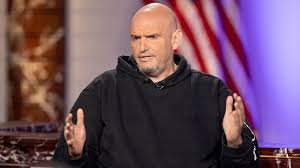
During an appearance on the “All-In Podcast,” Fetterman responded to the question of who leads the Democratic Party with a stark assessment: “We don’t have one.” He quickly followed up, stating, “TDS is the leader right now. Our party is governed by the TDS.”
Fetterman’s Stance on Key Issues
Fetterman’s comments came alongside his strong endorsement of Operation Epic Fury, the U.S. attack against Iran. He positioned himself as a relative outlier within his party, stating, “I’m literally the only Democrat in America, uh, in Congress, that I’ve come across that’s saying, I think it’s a great thing to break and destroy the Iranian regime. I think it’s entirely appropriate to hold them accountable.”
He further illustrated his point about “TDS” by suggesting that even a benign action by Trump, like enjoying a leisurely Sunday with ice cream, would be met with automatic opposition from many Democrats. This highlights a perceived tendency within the party to react negatively to anything associated with the former president, regardless of its inherent merit.
A Consistent Pro-Israel Advocate
Senator Fetterman has consistently demonstrated strong support for Israel. He recently expressed his pride in standing with Israel following the events of October 7th, stating on X (formerly Twitter): “As a Democrat, I’m deeply proud to stand with Israel through the horror of 10/07.” He also voiced his support for the military operation Epic Fury, emphasizing the importance of prioritizing country over party.
The Origins and Implications of ‘TDS’
The term “Trump Derangement Syndrome” originated as a critique of what some saw as an overblown and often hysterical reaction to Donald Trump’s presidency. While initially used by his supporters, the phrase has since become a point of contention, with critics arguing it’s used to dismiss legitimate concerns about Trump’s policies and behavior. Britannica provides further context on the term and its usage.
Fetterman’s use of the term, even while seemingly critical of its influence within his own party, has reignited the debate surrounding its validity and the extent to which it shapes political discourse. It raises questions about the role of partisan animosity in policymaking and the ability of both parties to find common ground.
Alex Nitzberg is a writer for Fox News Digital.



