
West Bengal Assembly Elections 2026: A Seismic Shift in the Political Landscape?
The atmosphere in Kolkata is electric as the West Bengal Assembly Elections 2026 reach their climax. After a month of frenzied campaigning and high-voltage political drama, verdict day has finally arrived. With 293 seats on the line, the state is witnessing a high-stakes battle that could either cement the legacy of the current administration or rewrite the history books of Indian politics.
The Early Trends: A Saffron Surge
As the counting of votes progressed on May 4, 2026, early trends signaled a potential landslide for the Bharatiya Janata Party (BJP). In a stunning turn of events, the BJP crossed the halfway mark in leads within the first few hours of counting, leading in as many as 167 seats. Key constituencies such as Jalpaiguri, Nandigram, and Barabani showed strong momentum for the saffron party.
On the other hand, the All India Trinamool Congress (TMC), fighting to retain its power for a fourth consecutive term, found itself trailing in several critical areas. While the TMC initially held leads in seats like Kolkata Port and Howrah, the gap widened as the day progressed, leading party leaders to describe the situation as “fishy” and urging supporters to remain cautious.
The Clash of Titans: Mamata Banerjee vs. Suvendu Adhikari
One of the most watched contests of the election is the battle for the Bhabanipur seat, featuring a direct face-off between Chief Minister Mamata Banerjee and the BJP’s Suvendu Adhikari. The lead in this seat has fluctuated wildly, switching hands multiple times throughout the counting process. Adhikari attributed his lead to demographic-led voting, highlighting a significant shift in support within specific local areas.
Key Performance Indicators at a Glance:
- BJP: Strong lead in over 140 seats by mid-morning, eyeing a historic first-time government in the state.
- TMC: Leading in approximately 66 to 82 seats, struggling to maintain its previous dominance.
- CPI(M) & Congress: Both parties are struggling to reclaim their lost ground, with negligible leads reported in the early rounds.
Controversies and Voter Turnout
While the State’s Chief Electoral Officer reported a record-breaking voter turnout (over 91% in both phases), the figures have been clouded by controversy. The SIR (Special Electoral Roll) exercise, which reportedly removed around 91 lakh names from the rolls, has led critics to argue that the record turnout is misleading due to a significant decrease in the total number of eligible voters.
Furthermore, allegations of irregularities have surfaced. TMC leader Shashi Panja raised concerns regarding the handling of election papers and the delayed entry of authorized agents into counting centers, questioning the transparency of the process.
Security and Transparency Measures
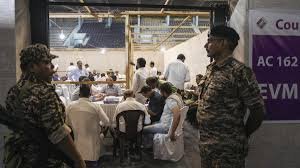
To ensure a peaceful transition and transparent results, the Election Commission of India (ECI) deployed a massive security grid. More than 2.5 lakh personnel from the Central Armed Police Forces (CAPFs) and state police were stationed across 77 counting centers in 23 districts.
The ECI appointed 165 additional counting observers and 77 police observers to prevent intimidation and ensure that the democratic process is upheld with the highest standards of efficiency.
What’s Next for West Bengal?
As the final results trickle in, the state stands at a crossroads. Whether West Bengal continues under the leadership of Mamata Banerjee or welcomes its first BJP government, the 2026 election marks a pivotal moment in the state’s socio-political evolution. The promise of “paribortan” (change) continues to be the central theme as the people of Bengal decide their destiny.



