
Tensions Reach a Breaking Point: The US and Iran Trade Heavy Blows
The geopolitical landscape of the Middle East has entered a volatile phase. In a series of rapid escalations, President Donald Trump has warned that the United States would launch strikes against Iran, claiming that while the conflict would be “short-lived,” the previous ceasefire is now effectively void. This development marks a dangerous turn in a long-standing rivalry, bringing the world closer to a large-scale regional confrontation.
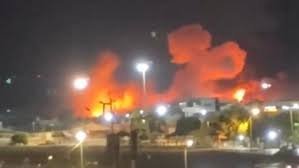
The catalyst for this latest surge in violence was a series of attacks attributed to Tehran targeting three commercial vessels. In a swift and massive response, the U.S. military targeted over 80 sites across Iran. According to state media, the strikes resulted in the deaths of eight Iranian soldiers and caused significant explosions near the strategic port of Bandar Abbas and the Kharg oil terminal.
The Strategic Battle for the Strait of Hormuz
At the heart of this conflict lies the Strait of Hormuz, one of the world’s most critical maritime chokepoints. Iran has sought to impose strict passage rights, threatening ships that bypass their authorized routes. This waterway is vital for global energy security, as approximately 20% of the world’s liquefied natural gas (LNG) and crude oil pass through it.
In retaliation for U.S. strikes, Tehran claimed to have hit 85 American military installations located in Kuwait and Bahrain. This “negotiation by force” highlights the fragility of the current security architecture in the Gulf.
Economic Ripple Effects: Oil Prices Surge
The global market reacted instantly to the news of the escalation. Brent crude oil—the international benchmark—jumped by more than 8%, climbing to $80.10 per barrel. Investors fear that any prolonged disruption in the Strait of Hormuz could trigger a global energy crisis, emphasizing how regional conflicts have immediate impacts on Canadian and international economies.
Diplomatic Efforts Amidst the Chaos
Despite the martial rhetoric, diplomatic channels remain partially open. Mediators from Qatar and Pakistan, along with the United Nations, are urgently calling for de-escalation. UN Secretary-General Antonio Guterres has expressed deep concern, urging both parties to return to the negotiating table to prevent a total war.
Analysts from the International Crisis Group (ICG) suggest that while the rhetoric is aggressive, both powers may be using military pressure as a leverage tool for future diplomatic concessions.
A Region in Turmoil: Beyond the Iran-US Clash
The conflict is not isolated; it is part of a broader pattern of instability across the region:
- n
- Lebanon: Israeli drone strikes have reported casualties in southern Lebanon, despite existing truce attempts.
- Gaza: The humanitarian crisis persists, with reports of ongoing casualties and a proposed “humanitarian zone” by the Peace Council.
- Syria: Political transitions remain fragile, marked by recent attacks in Damascus.
- Iran’s Internal State: These events coincide with the national funerals of the late Supreme Leader Ali Khamenei, which served as a massive demonstration of national unity and strength.
As the world watches the Middle East, the balance between military deterrence and diplomatic resolution remains precarious. For more real-time updates on global security, you can follow reports from Reuters.



