
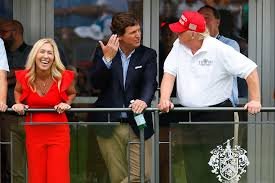
The Unlikely Anti-War Voice: Tucker Carlson’s Critique of the Iran Conflict
In a political landscape often defined by rigid divides, few things are as jarring as seeing a former Trump stalwart turn his critique toward the administration’s foreign policy. Recently, Tucker Carlson sparked a firestorm in an interview with The New York Times, labeling President Trump’s military engagement with Iran as “the single most foolish thing any American president has ever done.”
While some may dismiss Carlson’s rhetoric as hyperbolic, his stance highlights a growing and dangerous trend for the political establishment: a burgeoning anti-war sentiment taking root on the American right.
A Right-Wing Shift: Beyond the Mainstream
Carlson isn’t an isolated case. A wave of conservative voices is beginning to question the “forever wars” and the influence of foreign interests on US decision-making. From the late Charlie Kirk to podcasters like Theo Von, the narrative is shifting. There is a visible, emotional distress regarding the loss of innocent lives in Iran and Gaza, suggesting that the traditional hawkishness of the Republican Party is fracturing.
This shift is backed by data. Recent polling indicates a startling trend:
- n
- Broad Disapproval: Approximately 60% of Americans believe the decision to use military force in Iran was a mistake.
- Youth Dissatisfaction: A significant 57% of Republican voters under the age of 49 now view Israel unfavorably.
- Fragile Coalitions: The pro-Israel constituency is increasingly limited to Republicans over 50, a demographic that is not a sustainable long-term political coalition.
The Democratic Dilemma: A Missed Opportunity?
For the Democratic Party, this shift should be a clarion call. While the base of the party is overwhelmingly anti-war—with over 90% opposing the Iran conflict—the leadership remains hesitant. Figures like Chuck Schumer and Hakeem Jeffries have been criticized for “leading from behind,” often appearing to jump on the anti-war bandwagon only after the political tide has already turned.
The disconnect is evident in the primary races. In states like Maine and Michigan, candidates who openly criticize the influence of powerful lobbying groups like AIPAC are gaining significant traction. Yet, the party establishment continues to favor centrist candidates who avoid sharp critiques of foreign policy.
The Shadow of the 2024 Election and the Road to 2028
The consequences of this hesitation were felt in the 2024 election. Evidence suggests that many voters, particularly those who supported Biden in 2020, shifted their vote or stayed home due to the administration’s role in the Gaza conflict. According to data from the Gallup and other polling entities, foreign policy has become a primary driver of voter volatility.
If the Democratic Party fails to embrace its own anti-war leaders and voters, they risk a strategic disaster in 2028. There is a very real possibility that Tucker Carlson or similar figures could emerge as the primary “anti-war” candidates, capturing a disillusioned electorate across the political spectrum.
Final Thoughts: A Warning for the Future
Whether one views Tucker Carlson as a visionary or a scoundrel is almost irrelevant to the political math. What matters is that he is articulating a sentiment that resonates with millions of Americans. For the Democratic leadership, the lesson is clear: ignoring the anti-war hunger of the electorate doesn’t just risk an election—it risks handing the future of US foreign policy to the furthest fringes of the right.



