Trump’s Unconventional Rally Tactics: A Departure from the Karl Rove Era?
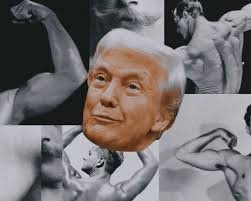
Beyond the Playbook: Trump’s Bold New Strategy at Midterm Rallies
In the world of high-stakes American politics, strategy is usually a game of precision, polling, and calculated messaging. For years, the Karl Rove school of thought—centered on data-driven targeting and disciplined communication—defined the Republican approach to winning elections. However, Donald Trump continues to prove that he doesn’t just rewrite the playbook; he throws it away entirely.
During recent campaign stops across the US, Trump has introduced a tactic that would leave traditional strategists like Karl Rove bewildered: meticulous, unsolicited, and often startling physical assessments of the men sharing his stage.
The Case of Jon Husted: From Football to ‘Physical Assessments’
At a recent rally in Youngstown, Ohio, Trump broke away from his scripted remarks to champion Republican senator Jon Husted. Upon learning that Husted had played university football, the former president decided to conduct a real-time physical appraisal.
The highlights of this unconventional endorsement included:
- n
- A detailed observation of Husted’s physique, described as a “physical assessment.”
- Explicit comments regarding Husted’s “ass” and “hands,” which Trump likened to “claws.”
- A forensic-level analysis of Husted’s jawline and shoulders, which Trump claimed felt like “a piece of steel.”
While Husted has represented Ohio with distinction since 2025, these intimate appraisals have left observers wondering if this is a calculated move to project strength or simply a symptom of Trump’s freewheeling style.
A Pattern of Aesthetic Pluralism
It isn’t just Husted who has fallen under Trump’s aesthetic microscope. From Georgia to Oklahoma, the former president has praised a variety of men for their looks, creating what some call an “aesthetic pluralist” approach to campaigning.
Take, for example, Ed Gallrein, a Navy Seal turned dairy farmer in Kentucky, whom Trump labeled a “perfect man” and a “beautiful guy.” In Georgia, Trump compared the appearance of Democratic senator Jon Ossoff to the 80s character Pee-wee Herman, while praising Republican challenger Mike Collins as being “all man.” This trend reached a peak in Oklahoma, where Trump summoned “big, strong, handsome Oklahoma studs” onto the stage, leaving the crowd in a state of nervous laughter.
Media Polarization: ‘Assman-in-Chief’ vs. ‘Guy Talk’
As with most Trump-led events, the media reaction has been sharply divided. CNN’s Anderson Cooper leaned into the absurdity, jokingly dubbing Trump the “assman-in-chief,” while noting the irony of the situation. Conversely, Fox News host Jesse Watters attempted to normalize the behavior, suggesting that Trump is simply saying what “guys say” and that his status as a straight man allows him to compliment other men’s athleticism and appearance without ambiguity.
Will These Tactics Work Where Traditional Strategy Fails?
With Democrats projected to make significant gains in the House and potentially the Senate—even in traditionally “red” states like Mississippi and Kansas—the GOP is under immense pressure. The question remains: can these idiosyncratic personality-driven rallies flip the script?
While a traditional strategist like Karl Rove might focus on policy pivots and suburban voter demographics, Trump is betting on raw, unpredictable energy. Whether praising “steel-like shoulders” and “beautiful guys” can counteract low popularity ratings remains to be seen as the November midterms approach.
For more analysis on the current US political landscape, you can explore the latest reporting from Reuters US News.
📰 You May Also Like