
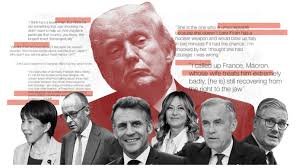
A Scenic Backdrop for a Diplomatic Storm
The serene landscape of Évian-les-Bains, a French spa resort, may seem like the perfect setting for international cooperation. However, as President Donald Trump arrives for the G7 summit, the placid waters of the lakeside resort contrast sharply with the volatile atmosphere brewing among the world’s most powerful leaders.
While the G7 is designed to foster collaboration between the United States’ staunchest allies, the current climate is anything but harmonious. Over the past few months, Trump has reopened old wounds and ignited fresh feuds, transforming diplomatic dialogues into a series of personal and political clashes.
The Catalyst: The Conflict with Iran
At the heart of the current friction is a fundamental disagreement over foreign policy. The central point of contention is the US-Israeli war against Iran. Trump has expressed deep frustration over the unwillingness of his G7 counterparts to join the military effort, a topic that has taken center stage following a recent agreement with Tehran.
This tension is not new; the relationship between the U.S. presidency and the G7 has been strained for years. While allies previously attempted to overlook Trump’s provocative rhetoric, many have now reached a breaking point and are beginning to push back.
A Breakdown of Fractured Alliances
The dynamics between Trump and the individual leaders of the G7 reveal a pattern of rapid shifts from respect to resentment:
- Emmanuel Macron (France): As the host, Macron has shared the most complex history with Trump. Their relationship fluctuates between mutual respect and personal jabs, with Macron appearing increasingly exasperated by the American president’s unpredictability.
- Mark Carney (Canada): Initially, the relationship seemed an improvement over the tenure of Justin Trudeau. However, trade disputes and a pointed speech at Davos shifted Trump’s tone. The president has since mockingly referred to him as “Governor Carney,” hinting at a provocative suggestion to make Canada the 51st US state.
- Keir Starmer (UK): Despite Starmer’s efforts to cultivate a strong bond with Trump, his refusal to support the war with Iran led to a sharp decline in their rapport. Trump has since dismissed the British Prime Minister, stating he is “no Winston Churchill.”
- Friedrich Merz (Germany): Merz attempted a gesture of kinship by presenting Trump with his grandfather’s birth certificate. However, his status as a favored leader evaporated after he questioned the Iran war and suggested the US was being “humiliated” by Iranian leadership.
- Giorgia Meloni (Italy): Even the most aligned ally wasn’t safe. After Meloni declined to participate in the Iran conflict and criticized Trump’s remarks about Pope Leo XIV, the president lashed out, proving that loyalty is conditional.
- Sanae Takaichi (Japan): Takaichi has worked tirelessly to maintain a personal connection with Trump via their shared link to Shinzo Abe. While she has avoided the brunt of his anger, tensions remain regarding Japan’s stance on Iran and a poorly received joke about Pearl Harbor.
The Future of Global Cooperation
As the summit progresses, the question remains: can these leaders find common ground, or will the Trump G7 era be defined by isolation and discord? For more information on the official goals of the group, you can visit the official G7 portal to see how these nations traditionally align.
In an era where geopolitical stability is fragile, the divide over Iran and the personalization of diplomacy could have lasting effects on the security architecture of the West.



