
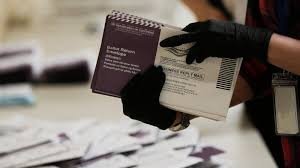
The Legal Tug-of-War: Trump Administration and USPS Ballot Changes
The battle over election integrity and federal oversight has reached a critical juncture. Recently, a federal appeals court in Washington, D.C., granted a temporary victory to the Trump administration in its effort to tighten control over the U.S. Postal Service (USPS) and its handling of mail-in ballots.
In a unanimous decision, a three-judge panel of the D.C. Circuit Court of Appeals paused a lower court’s ruling. Previously, that lower court had blocked the USPS from implementing restrictions on mail-in voting. While this is a significant step forward for the administration, it is not yet a total victory, as legal hurdles remain in other jurisdictions.
What are the Proposed USPS Ballot Changes?
At the heart of this controversy is a proposed rule that would fundamentally alter how the United States Postal Service interacts with state election officials. The administration is seeking to increase federal oversight by requiring states to comply with stricter regulations.
The key points of the proposed rule include:
- n
- Mandatory Voter Lists: The USPS would compel states to provide official lists of approved voters.
- Delivery Restrictions: In a striking revelation during a Senate Homeland Security and Governmental Affairs Committee hearing, Postmaster General David Steiner indicated that the USPS could refuse to deliver mail-in ballots from states that fail to provide these manifests.
- Stricter Regulations: Enhanced verification processes for absentee ballots to ensure they meet federal criteria.
n
n
n
The NAACP and the Fight for Voting Rights
The NAACP has been at the forefront of opposing these measures. The organization has a history of litigation against the USPS, including a 2020 lawsuit regarding delays in ballot deliveries during the presidential election. Although a settlement was reached in 2021—where the USPS pledged to prioritize the timely delivery of election mail through 2028—the NAACP argues that the new proposed rules jeopardize voter access.
Why the Appeals Court Ruled in Favor of the Administration
The D.C. Circuit Court of Appeals based its decision on several key legal interpretations:
- Prematurity: The court suggested the lawsuit was premature because the proposed rule had not yet been finalized.
- Scope of Settlement: The judges ruled that these specific changes are not covered by the 2021 agreement between the USPS and the NAACP.
- Irreparable Harm: The court acknowledged the administration’s argument that waiting for a final resolution could cause “irreparable harm,” noting that once an election occurs, there is no possibility of a “do-over.”
n
n
n
What Happens Next?
Despite the win in D.C., the Trump administration does not have a universal green light. A separate injunction from a judge in Massachusetts remains in place, continuing to block the policy in that jurisdiction.
However, this ruling sets a potentially powerful precedent. If other appeals courts follow the D.C. Circuit’s lead, the administration may successfully implement these USPS ballot changes before the next major election cycle, shifting the landscape of mail-in voting in the United States.



