
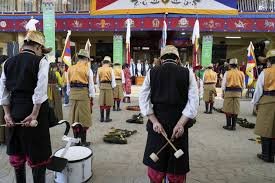
Nearly seven decades after the 1959 uprising in Lhasa, the capital of Tibet, the Chinese government continues to treat March 10th with heightened vigilance. This date marks a pivotal moment when popular discontent against eight years of rule by the People’s Republic of China erupted into protest, leading to a brutal imposition of direct rule and the exile of the Dalai Lama, Tibet’s revered spiritual and political leader. Today, few Tibetans dare to publicly commemorate this day, as the risks associated with doing so are simply too great.
The Unrelenting Repression
The repression of Tibet remains unrelenting. Beyond the constant barrage of state propaganda – a well-funded campaign amplified by state-controlled social media – independent news from within Tibet is scarce. However, a handful of exile-run platforms offer a crucial window into the realities of life in this heavily oppressed region. Recent reports (2024-2025) document a disturbing trend: 45 politically motivated detentions. These aren’t primarily linked to large-scale public protests, but rather to actions taken in the digital sphere.
- Digital Surveillance: Nineteen Tibetans were punished for communicating information abroad (many with family in the diaspora), sharing content deemed “illegal” regarding the Dalai Lama, or simply possessing such material on their devices.
- Arbitrary Detention: A waitress in Shigatse city was detained following a routine phone search – a common surveillance tactic – and held for a year before being released without charge.
- Enforced Disappearances: At least 15 cases amount to enforced disappearances, with authorities refusing to disclose the whereabouts of the detainees, including three popular singers.
- Crackdown on Education: Four senior religious figures have been detained, including Choktrul Dorje Ten and Khenpo Tenpa Dargye, both administrators of government-approved vocational schools. This highlights a broader crackdown on institutions promoting Tibetan language and culture.
While many detentions stem from online activity, some are directly linked to peaceful protests. Five Tibetans remain in custody following the arrest and mistreatment of hundreds who protested the construction of a dam in Sichuan province in 2024. In March 2024, a lone Kirti monk was arrested after a brief demonstration calling for freedom and the Dalai Lama’s return; his sentence remains unknown. Reports also indicate mass arrests followed large-scale protests against renewed gold mining operations in November 2025.
The Urgent Need for International Action
The international community cannot remain silent in the face of this ongoing repression. World leaders must seize this moment to challenge China’s enforced silence surrounding Tibet. This requires:
- Demanding Information: Pressing for detailed information regarding the 45 known detention cases.
- Accountability: Seeking accountability for deaths in custody and instances of mistreatment.
- Unfettered Access: Advocating for genuine and unrestricted international access to the region to independently verify conditions on the ground.
The situation in Tibet demands immediate attention and a concerted effort from the global community to uphold human rights and ensure the preservation of Tibetan culture and identity. For further information on human rights abuses around the world, visit Human Rights Watch.



