
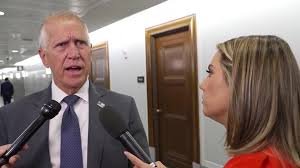
The Balancing Act: How Thom Tillis Aims to Stabilize the Republican Party
In a political climate marked by intense polarization and internal friction, Senator Thom Tillis has emerged as a voice calling for pragmatism and strategic stability. Recently, the North Carolina Senator made a candid observation that has sparked significant debate across the political spectrum: he believes he is working to “protect the Republican Party from itself.”
This statement highlights a growing tension within the Grand Old Party (GOP), where the struggle between traditional conservatism and new populist movements continues to shape the party’s identity and electoral viability.
The Core of the Conflict: Ideology vs. Strategy
Senator Tillis’s perspective suggests that the party may be drifting toward internal conflicts that could hinder its ability to govern effectively and appeal to a broader base of voters. By focusing on protecting the party, Tillis is likely emphasizing several key goals:
- n
- Maintaining Legislative Efficacy: Ensuring that internal disputes do not paralyze the party’s ability to pass meaningful legislation in the United States Senate.
- Broadening Voter Appeal: Avoiding extreme rhetoric that may alienate moderate and independent voters in key swing states.
- Long-term Sustainability: Building a cohesive party platform that can survive beyond a single election cycle.
Why This Matters for the Future of the GOP
The internal dynamics of the Republican Party are not just a matter of political gossip; they have real-world implications for policy-making. When a party is divided, the result is often a gridlock that prevents the implementation of core conservative principles. Thom Tillis is positioning himself as a stabilizing force, attempting to bridge the gap between different factions to ensure the party remains a viable vehicle for governance.
Whether this effort to “protect the party” will succeed depends on the party’s willingness to embrace a more unified strategy over individual ideological purity. As the political landscape continues to shift, the role of moderating voices like Tillis becomes increasingly critical.
Conclusion: A Path Toward Unity?
Thom Tillis’s admission is a rare glimpse into the internal anxieties of the Republican leadership. By acknowledging the risks of internal volatility, he is calling for a more disciplined approach to politics. For those following the trajectory of the GOP, the actions of Senator Tillis will be a key indicator of whether the party can evolve and unify in the face of growing challenges.



