
html
The White House Ballroom: A Symbol of Division, a Canvas for Democracy’s Future
The grandeur of presidential tradition often masks intense political battles. Nowhere is this more apparent than in the ongoing debate surrounding the newly constructed ballroom at the White House East Wing. Born from controversy during the Trump administration, this sprawling addition has become a potent symbol, with prominent Democratic figures, including Senator Elizabeth Warren, weighing in on its destiny.
A Legacy Forged in Controversy
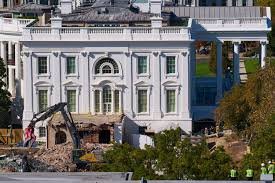
The demolition of the decades-old East Wing last month, replaced by a massive new ballroom, has ignited a fierce debate. President Donald Trump envisioned a grand space for hosting dignitaries, eliminating the need for temporary tents on the South Lawn. However, the project, reportedly bankrolled by private donations and undertaken without extensive public discourse, has drawn sharp criticism from across the political spectrum.
This isn’t the first time a presidential renovation has stirred controversy; Harry Truman’s addition of a South Lawn balcony also faced ridicule. Yet, the scale and polarizing nature of the Trump ballroom set it apart, making it a prime target for future political scrutiny. A Washington Post-Ipsos poll highlighted significant public opposition, particularly among Democrats and independents.
Democratic Visions: Reclaiming the People’s House
Should a Democratic president take office in 2028, the fate of this 90,000-square-foot structure will undoubtedly be on the agenda. Many Democratic officials view the ballroom not just as a physical space, but as a metaphor for an administration they describe as reckless and disdainful of democratic norms.
Leading Democratic voices are already workshopping compelling alternatives:
- A Space for the People: Representative Jamie Raskin (D-Md.) strongly advocates against the ballroom serving an “American aristocracy.” He envisions a hybrid structure, perhaps named the “Democracy Matters Ballroom,” that could host some dinners but primarily showcase exhibits on America’s ongoing struggle for full-fledged democracy, from King George III to modern challenges.
- Empowering Forgotten Americans: Rep. Ro Khanna (D-Calif.) suggests a radical shift, believing the space should “celebrate and empower forgotten Americans.” He proposes a “vox populi” approach, asking communities nationwide for ideas on how to transform the space to serve the public, not just the elite.
- A Museum of Accountability: Saikat Chakrabarti, a congressional candidate, has floated the idea of converting the ballroom into a Smithsonian-run museum focused on “corruption and autocracy.” This museum would publicly list private donors to the project, shining a light on its financial origins.
While Senator Elizabeth Warren has not directly commented on this specific ballroom project, her consistent advocacy for transparency, accountability, and the empowerment of working families strongly aligns with the sentiments expressed by her Democratic colleagues. Her focus on combating corporate influence and ensuring government serves all citizens suggests she would likely support efforts to repurpose the space in a way that truly reflects the values of American democracy rather than private interests or ostentatious displays.
The Cost of Inertia vs. Transformation
For a new president, the path forward isn’t simple. While demolishing or repurposing the ballroom could send a powerful political message, it also incurs significant costs and logistical challenges. The White House Historical Association, through board member Anita McBride, has expressed hope that the ballroom remains, offering a convenient venue for large events and potentially including offices for the First Lady and visitor services, which serve the presidency in a unique way.
However, for many Democrats, including potentially figures like Elizabeth Warren, leaving the ballroom as is would tacitly validate the means by which it was built. California Governor Gavin Newsom has called Trump’s presidency a “wrecking ball,” suggesting the ballroom itself is a metaphor for a disregard for rules and norms.
Beyond the Bricks: A Metaphor for the Presidency
Edward Lengel, former chief historian for the White House Historical Association, astutely noted that the ballroom makes the White House resemble “a palace,” rather than the residence symbolizing American democracy it’s meant to be. This sentiment encapsulates the core of the Democratic argument: the White House, the People’s House, should reflect the nation’s democratic ideals, not the personal tastes or perceived grandeur of any single administration.
The debate over the White House ballroom is more than just about architecture; it’s about the very soul of the presidency and the image America projects to itself and the world. As the 2028 election looms, expect this symbolic structure to remain a focal point of political discourse, with its future a tangible representation of competing visions for the nation.



