
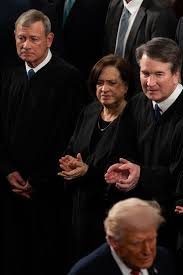
The Supreme Court of the United States: Understanding the Pinnacle of American Justice
The Supreme Court of the United States (often referred to as SCOTUS) stands as the highest judicial body in the land. As the final arbiter of the law, its decisions are binding and have a profound impact on the legal landscape, civil liberties, and the very fabric of American society. But how does this institution actually function, and why are its rulings so critical?
What is the Supreme Court of the United States?
Established by Article III of the U.S. Constitution, the Supreme Court is the head of the federal judiciary. Its primary role is to interpret the Constitution and ensure that laws passed by Congress or actions taken by the Executive branch align with the nation’s founding principles.
The Court currently consists of nine justices: one Chief Justice and eight Associate Justices. These positions are appointed for life, ensuring that the judiciary remains independent from political pressures and election cycles.
The Power of Judicial Review
One of the most significant powers of the Supreme Court is judicial review. This is the authority to declare legislative acts or executive orders unconstitutional. This power was firmly established in the landmark case Marbury v. Madison (1803), cementing the Court’s role as a crucial check and balance within the U.S. government.
How Cases Reach the Supreme Court
The Court does not hear every case. Thousands of petitions are filed annually, but only a small fraction are accepted. The process typically involves:
- n
- Writ of Certiorari: A request for the Court to review a lower court’s decision.
- The Rule of Four: If at least four of the nine justices agree to hear a case, it is placed on the docket.
- Oral Arguments: Lawyers present their cases before the justices, who often ask probing questions to clarify legal points.
- The Final Opinion: The justices vote, and a majority opinion is written to explain the legal reasoning behind the decision.
Landmark Decisions That Shaped History
Throughout its history, the Supreme Court of the United States has issued rulings that transformed the country. Some of the most influential include:
- n
- Brown v. Board of Education (1954): Ended legal segregation in public schools, declaring “separate but equal” unconstitutional.
- Roe v. Wade (1973) and Dobbs v. Jackson (2022): Highlighting the Court’s evolving interpretation of privacy and reproductive rights.
- Miranda v. Arizona (1966): Established the requirement that suspects be informed of their rights upon arrest.
Why the Supreme Court Matters Today
In an era of deep political polarization, the Supreme Court remains a focal point of national debate. From voting rights to environmental regulations and digital privacy, the decisions made in the courtroom often resolve the most contentious issues of the day.
For those wishing to dive deeper into current cases and legal opinions, the official Supreme Court website provides comprehensive archives of opinions and schedules. For a broader academic perspective on the U.S. legal system, the Legal Information Institute at Cornell Law School is an invaluable resource.
Conclusion
The Supreme Court of the United States is more than just a legal body; it is the guardian of the Constitution. By balancing precedent with evolving societal needs, SCOTUS ensures that the rule of law prevails over the whims of political power, maintaining the stability of the American republic.



