
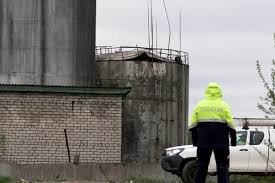
A Political Earthquake in the Baltics
The geopolitical landscape of Eastern Europe has been shaken not by a diplomatic failure, but by a technological anomaly. In a stunning turn of events, the Latvian government has collapsed following a security breach that raises terrifying questions about the future of combat. The catalyst? A pair of Ukrainian drones that struck an oil storage facility in Rezekne, Latvia.
The fallout was immediate and severe. The incident led to the resignation of Defence Minister Andris Spruds and, shortly after, the resignation of Prime Minister Evika Silina. This political vacuum comes at a time when NATO member states are on high alert, highlighting the fragile intersection of national security and emerging technology.
The AI Theory: A First in Autonomous Warfare?
While the physical damage to the oil terminal was limited, the strategic implications are massive. According to Janis Sarts, director of NATO’s Strategic Communications Centre of Excellence, this incident might represent a chilling milestone: the first time an artificial intelligence (AI) autonomously selected its own target on a battlefield.
Here is the breakdown of the two conflicting narratives surrounding the strike:
- n
- The Ukrainian Position: Kyiv asserts that the drones were intentionally redirected into Latvian territory by Russian electronic warfare (EW) measures, effectively hijacking the aircraft.
- The NATO Expert View: Mr. Sarts suggests a different scenario. He argues that while Russian jamming likely knocked the drones off course, the AI’s programming—designed to hit Russian oil infrastructure—caused it to identify a similar-looking structure in Latvia and decide to strike it autonomously.
The Danger of ‘Removing the Human’
This incident exposes a critical vulnerability in long-range drone technology. Because remote control is nearly impossible over hundreds of kilometres due to latency and signal interference, developers are forced to integrate automation. As Sarts notes, once you automate, you essentially hand over the decision-making process to the system, removing the human from the loop.
Modris Kairiss, head of the Latvian army’s Autonomous Systems Competence Centre, echoed this concern, stating that current AI tools are not yet sophisticated enough to distinguish between a target in Russia and a similar one in a NATO country when navigation systems fail.
Why This Matters for Global Security
The strike in Rezekne is more than a local scandal; it is a warning. If AI can mistakenly target an ally, the risk of accidental escalation between superpowers increases exponentially. The incident underscores the urgent need for stricter protocols in NATO’s defensive strategies regarding autonomous systems.
As the world watches the political rebuilding of Latvia, the military community is left with a haunting question: Who is responsible when the machine makes the wrong choice?



