
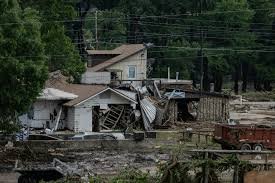
The Impossible Choice: Affordable Housing vs. Climate Risk in America
Imagine facing a dilemma where the dream of owning an affordable home forces you into the path of devastating hurricanes, wildfires, or floods. This isn’t a hypothetical exercise; it’s the stark reality for millions across the United States, as a mounting affordable housing crisis collides head-on with the escalating threats of climate change.
Dr. Ivis García, an Associate Professor of Landscape Architecture and Urban Planning at Texas A&M University, whose extensive research is supported by prestigious institutions like the National Science Foundation and the U.S. Department of Housing and Urban Development, highlights this critical intersection. Her work reveals a deeply troubling trend: socioeconomic status is increasingly dictating one’s exposure to environmental disasters.
The Great American Migration: Chasing Affordability, Finding Risk
The numbers don’t lie. States known for high quality of life and robust job markets, like California, are experiencing an unprecedented exodus. In recent years, California has seen the largest out-migration of any U.S. state, driven primarily by housing costs that are more than double the national median. A median home in California can fetch nearly a million dollars, with mortgages skyrocketing.
Where are these residents going? Many are heading to states like Texas and Florida, drawn by significantly lower housing prices. Texas, in particular, has become a top destination, gaining tens of thousands of new residents annually. While the appeal of more spacious living and reduced taxes plays a role, the dominant factor is undoubtedly the quest for more affordable housing options.
The High Cost of “Affordable” Living
This migration isn’t merely a shift in demographics; it’s a desperate scramble for financial stability. For many, the annual income required to qualify for a mortgage in high-cost areas vastly exceeds the median household income. The U.S. Census Bureau reported that over 21 million renter households nationwide spent more than 30% of their income on housing in 2023. For these families, the financial math dictates their choices, even if the risk calculation remains daunting.
As Dr. García points out, when housing in safer, economically stable areas becomes unattainable, the only truly affordable properties are often found in locations highly vulnerable to climate hazards. This means low-lying flood-prone areas in Houston, coastal regions susceptible to hurricanes, or higher-wildfire-risk areas as urban expansion pushes into canyons and foothills.
Policy Failure, Not Personal Choice
“This isn’t really about individual choice — it’s about policy failure,” argues Dr. García. She emphasizes that restricting housing development through exclusionary zoning practices effectively prices out working families, pushing them towards areas with higher environmental risks. California, for instance, aims to build millions of new homes by 2030 but consistently falls dramatically short of its targets, exacerbating scarcity.
Her research on disaster recovery consistently demonstrates how housing policies intersect directly with climate vulnerability. Communities with limited housing options prior to disasters face even greater hurdles in rebuilding, disproportionately affecting low-income residents and communities of color.
The Brewing Insurance Crisis
Adding another layer to this complex problem is the growing insurance crisis in these high-risk destination states. Florida, Louisiana, and Texas have seen dozens of insurers collapse in recent years, overwhelmed by mounting claims from increasingly frequent and severe disasters. Economists like Benjamin Keys and Philip Mulder have described these insurance markets as “broken.”
Between 2018 and 2023, nearly 2 million homeowner policies were canceled nationwide – four times the historical rate. Yet, the flow of people into risky areas continues, often driven by the availability and cost of housing. The “wild beauty” of fire-prone regions, coupled with affordability, proves an irresistible draw for many, despite the inherent dangers.
Toward a More Resilient Future
Recognizing the intricate link between housing, climate, and social equity is paramount. The Federal Emergency Management Agency (FEMA) has at times encouraged communities to integrate “social vulnerability” – factors like poverty, lack of transportation, or language barriers – into disaster planning, alongside geographic risk. However, consistent and robust action on this front remains a challenge, as agencies sometimes step back from these initiatives.
Dr. García concludes with a powerful statement: “When a society forces people to choose between paying for housing and staying safe, that society has failed. Housing should be a right, not a risk calculation.” Until decision-makers genuinely address policies that create housing scarcity in safe areas and fail to protect residents in vulnerable ones, climate change will continue to dictate who thrives, who survives, and who is left behind when the next disaster strikes.
It’s time for comprehensive urban planning and housing policies that prioritize both affordable housing and community resilience, ensuring that safety is not a luxury, but a fundamental right for all.



