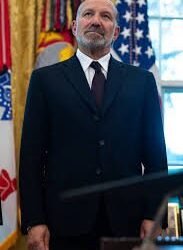
The Gloves are Coming Off: Mark Carney’s Bold Response to Trump and the Shift in Canada-US Relations
The Gloves are Coming Off: Mark Carney’s Bold Response to Trump and the Shift in Canada-US Relations
For the first eighteen months of his tenure, Canadian Prime Minister Mark Carney played the part of the consummate diplomat. When President Donald Trump jokingly suggested making Canada the 51st state back in May 2025, Carney didn’t flinch. Instead, he leaned into Trump’s own world of real estate, replying with a smile: “As you know from real estate, there are some places that are never for sale.”
It was a masterclass in tension management. However, the honeymoon phase of diplomatic appeasement is officially over. Recent events suggest that Mark Carney’s response to Trump has evolved from polite deflection to pointed mockery, signaling a dramatic shift in how Canada handles its powerful southern neighbour.
From Conciliation to Satire: The Turning Point
Carney, a former central banker turned political leader, spent the early part of his term attempting to smooth over the fractious relationship left behind by his predecessor. He flattered Trump, calling him a “transformative president,” and even conceded on key issues to avoid tariffs, including:
- Fentanyl Combat: Increasing efforts to stop drug trafficking, despite Canada contributing a tiny fraction of border seizures.
- Digital Services Tax: Dropping plans for a tax that would have targeted US tech giants.
- Public Gestures: Publicly backing Trump on controversial foreign policy issues, such as the conflict in Iran.
Despite these concessions, the rewards were slim. Trump continued to launch personal attacks, referring to Carney as “nasty” and “ungrateful,” and even sharing AI-generated memes mocking the Prime Minister. Now, Carney appears to have reached his limit.
The Power of the “Political Punchline”
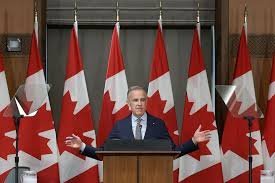
The shift became viral last Friday in Ottawa. During a speech to the Liberal Party, Carney didn’t just discuss clean energy; he performed a piece of political theatre. While describing a massive energy deal as the “functional equivalent of 18 Hoover Dams,” Carney mimicked Trump’s signature “accordion-style” hand gestures.
This wasn’t an accident. According to political analysts, this gentle mockery is a calculated strategy. When diplomacy fails to yield results, satire becomes a tool for domestic strength and international visibility. As Eric Van Rythoven from Carleton University notes, Trump is notoriously sensitive to disrespect, especially from leaders who maintain high global popularity.
Looking Beyond the Border: The EU Connection
While relations with Washington cool, Canada is warming up to Europe. Canada’s recent invitation to become an “associate member” of the European Union has created a new geopolitical pivot.
When Trump threatened fresh tariffs in response to this alliance, Carney’s response was blunt. Speaking in Strasbourg, he quipped that Canada wasn’t trying to create a rival power bloc, “only with better manners.”
A Divided Sentiment: Is the Relationship Broken?
This shift in strategy isn’t just about personality; it’s about public perception. Recent polling by Leger indicates a growing rift, with 41% of Canadians now viewing the US as an enemy country—a significant jump from earlier in 2025. By standing up to Trump, Carney is aligning himself with a Canadian public that is increasingly tired of being bullied in trade negotiations.
What Happens Next?
Does this mean the Canada-US relationship is headed for a permanent freeze? Not necessarily. Some analysts argue that because Trump views politics as a “reality show,” he may actually respect Carney more for fighting back. In the world of Trump, a “rough and tumble” relationship is often the precursor to a deal.
For now, however, Mark Carney has traded his central banker caution for a sharper edge, proving that while Canada may not be for sale, it is certainly ready to fight back.
📰 You May Also Like