The Geopolitical Power Play: How Trump, Putin, and Xi Jinping Shape the Modern World
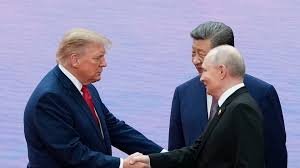
The New Era of Global Leadership: A Triangle of Power
In the complex landscape of 21st-century diplomacy, few names carry as much weight—or spark as much debate—as Donald Trump, Vladimir Putin, and Xi Jinping. These three figures represent the core of a geopolitical triangle that dictates the flow of global trade, security alliances, and ideological battles.
Understanding the interplay between the United States, Russia, and China is no longer just for political scientists; it is essential for anyone trying to navigate the modern economic and social climate. Let’s dive into how these leaders have reshaped the world stage.
Donald Trump: The Disruptor of the Status Quo
Donald Trump’s approach to foreign policy was defined by a singular mantra: “America First.” By challenging long-standing alliances and rethinking trade agreements, Trump introduced a transactional style of diplomacy that shook the foundations of international relations.
- n
- Trade Wars: His aggressive stance on tariffs, particularly against China, aimed to reduce trade deficits and protect domestic industries.
- Unconventional Diplomacy: Trump often bypassed traditional diplomatic channels, opting for direct communication with world leaders.
- NATO Re-evaluation: His demand for allies to increase defense spending forced a conversation about the cost of security in the West.
Vladimir Putin: The Strategic Architect of Influence
Vladimir Putin has spent decades working to restore Russia’s status as a global superpower. His strategy combines hard power, cyber capabilities, and a keen understanding of Western political fractures.
From the annexation of Crimea to the ongoing tensions in Eastern Europe, Putin’s goal has been to create a “sphere of influence” that prevents NATO expansion and asserts Russian dominance in the Eurasian space. His relationship with both Trump and Xi Jinping has been characterized by a tactical alliance of convenience to counter Western hegemony.
Xi Jinping: The Visionary of the Chinese Dream
Under the leadership of Xi Jinping, China has transitioned from a “quiet growth” phase to a bold assertion of global leadership. Xi’s “Belt and Road Initiative” is perhaps the most ambitious infrastructure project in history, linking China to Europe and Africa through trade corridors.
Xi’s vision focuses on:
- Economic Hegemony: Expanding the Yuan’s role in global trade.
- Technological Supremacy: Leading the world in 5G, AI, and green energy.
- Political Stability: Centralizing power domestically to ensure a unified front in international competition.
The Synergy and Conflict: Where the Paths Cross
The interaction between Trump, Putin, and Xi creates a volatile but fascinating dynamic. While Trump and Xi engaged in a high-stakes economic tug-of-war, Putin often played the role of the strategic balancer, leveraging his relationship with Beijing to offset pressure from Washington.
For a deeper analysis of how these power shifts affect global security, the Council on Foreign Relations provides extensive research on the evolving US-China-Russia triangle.
Conclusion: What Lies Ahead?
The world is moving away from a unipolar system dominated by a single superpower toward a multipolar reality. Whether through cooperation or confrontation, the legacies of Trump, Putin, and Xi Jinping will define the geopolitical borders of the next several decades.
As these leaders continue to navigate the tensions of sovereignty, economy, and ideology, the global community remains in a state of flux, waiting to see who will ultimately set the rules for the new world order.
📰 You May Also Like