
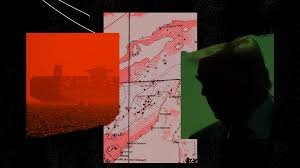
A Strategic Setback That Cannot Be Ignored
History is filled with American military setbacks, but most were either temporary or geographically isolated. The calamitous losses at Pearl Harbor were eventually reversed; the withdrawals from Vietnam and Afghanistan were costly, yet they occurred far from the central theaters of global competition. However, as Robert Kagan suggests, the current confrontation with Iran represents a fundamentally different kind of failure—one that cannot be repaired, ignored, or simply “managed.”
The stakes are no longer just about regional stability; they are about the very foundation of American global influence. A defeat in the Gulf is not merely a tactical loss; it is a signal to the world that the era of undisputed U.S. hegemony is drawing to a close.
The Strait of Hormuz: Iran’s Ultimate Leverage
The crux of this strategic crisis lies in the Strait of Hormuz. Unlike previous conflicts, the loss of control over this vital waterway creates a permanent shift in power. If Iran maintains dominance here, it doesn’t just win a war—it gains a weapon more potent than any nuclear program: the ability to hold the global energy market hostage.
- Economic Coercion: Iran could dictate tolls or limit transit based on diplomatic alignment.
- Regional Domination: Gulf Arab states, long protected by the U.S. security umbrella, may be forced to seek accommodation with Tehran.
- Global Instability: Any disruption to oil and gas flow could trigger prolonged global inflation and commodity shortages.
The “Paper Tiger” Effect: An Unreliable Superpower
For decades, the world relied on the U.S. Navy to ensure the freedom of navigation. However, the inability of the U.S. and Israel to collapse the Iranian regime—despite devastating military strikes—reveals a troubling reality. The conflict has exposed an America that appears unreliable and incapable of finishing what it starts.
This perception triggers a dangerous chain reaction. When allies and adversaries realize that the U.S. cannot or will not secure vital interests, they begin to adjust. This shift is already evident in the growing influence of China and Russia, who stand to benefit as the U.S. role diminishes.
The Road to a Post-American World
The consequences of this failure extend far beyond the Middle East. We are witnessing the acceleration of a global adjustment to a multipolar world. Several critical factors are driving this transition:
- Depleted Arsenals: The war has revealed that U.S. weapon stocks are perilously low, raising questions about readiness for other major conflicts (such as Taiwan or Eastern Europe).
- The Naval Arms Race: Nations in Europe and Asia, no longer trusting the U.S. to secure energy supplies, may begin building their own massive fleets to protect their economic stability.
- Strategic Isolation: Israel may find itself more isolated than ever, facing international pressure not to provoke an Iran that now wields immense energy leverage.
Conclusion: The High Cost of Walking Away
While some argue for a swift exit or a simple declaration of victory, the reality is that there is no return to the status quo ante. Whether through a forced ceasefire or a strategic retreat, the outcome is the same: Iran emerges stronger, and the U.S. emerges diminished.
As analyzed by thinkers like Robert Kagan, the U.S. is not just losing a regional conflict; it is losing its position as the world’s indispensable power. The world is moving toward an “every-nation-for-itself” reality, where order and predictability are replaced by raw leverage and strategic volatility.



