
The Battle for the Map: Supreme Court Rules on Texas Redistricting and the 2026 Midterms
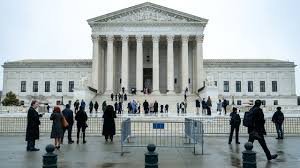
The political landscape of the United States is often decided not just by who votes, but by how the lines are drawn. In a high-stakes legal clash, the U.S. Supreme Court has recently handed a significant victory to the Republican Party, ruling in favor of Texas’ plans for redistricting its congressional districts.
This decision is more than just a legal technicality; it is a pivotal moment in the lead-up to the 2026 midterms, sparking intense debates between top political figures, including House Minority Leader Hakeem Jeffries and Florida Governor Ron DeSantis.
The Texas Ruling: Partisan Strategy vs. Racial Gerrymandering
The heart of the conflict lies in whether the redrawing of districts in Texas was driven by political gain or racial discrimination. A lower court had previously blocked the maps, arguing that the state had improperly “packed” Black and Latino voters into specific districts to dilute their influence—a practice known as racial gerrymandering.
However, the Supreme Court overturned this ruling. The high court’s decision rested on a few key points:
- n
- Legislative Good Faith: The Court noted that the challenging groups failed to grant the Texas legislature the presumption of acting in good faith.
- Lack of Alternatives: The justices pointed out that no viable alternative map was provided that met the state’s political needs.
- Election Stability: The Court emphasized that lower courts should not interfere with active primary campaigns, as it creates confusion and disrupts the federal-state balance.
n
n
n
The National Chessboard: Texas vs. California
Texas is not alone in this struggle. Mid-cycle redistricting battles have cropped up across the country. In a striking parallel, the Supreme Court also greenlit California’s map earlier this year.
Interestingly, the impact of these two decisions may essentially cancel each other out. While the Texas map provides a strategic advantage for Republicans, the California map offers a similar boost for Democrats. This “tug-of-war” ensures that both parties enter the 2026 midterms with reinforced strongholds, maintaining a precarious balance of power in Congress.
Why the Voting Rights Act Matters
The Department of Justice (DOJ) entered the fray by arguing that Texas’ map changes were driven by “partisan objectives” rather than racial ones. This distinction is crucial because, under the Voting Rights Act, partisan gerrymandering is treated differently than racial gerrymandering in the eyes of the law.
While the conservative majority on the Court saw this as a political matter, the three liberal justices—Sonia Sotomayor, Elena Kagan, and Ketanji Brown Jackson—dissented, signaling a deep ideological divide on how voting equity should be protected in the U.S.
Key Takeaways from the Redistricting Fight
| Factor | Republican Position | Democratic Position |
|---|---|---|
| Motivation | Partisan advantage (Legal) | Racial discrimination (Illegal) |
| Court View | Legislative good faith | Violation of Voting Rights Act |
| Outcome | Maps upheld for 2026 | Call for fairer representation |
As we move closer to the next election cycle, the battle over redistricting remains one of the most contentious issues in American politics. Whether these maps ensure stability or undermine representation will be a defining conversation for voters nationwide.



