
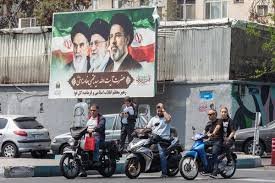
The Aura of Authority: Understanding the Role of a Supreme Leader
Throughout history, the concept of a supreme leader has evolved from ancient divine monarchies to modern geopolitical entities. But what exactly defines this role, and how does it differ from standard political leadership? At its core, a supreme leader is an individual who wields ultimate authority over a state, often blending political, military, and sometimes spiritual power into a single office.
The Evolution of Absolute Power
The transition from traditional kingship to the modern interpretation of a supreme leader is marked by the rise of ideological states. Unlike constitutional monarchs, whose roles are often ceremonial, a supreme leader typically holds the final word on all national policies, legal interpretations, and strategic military decisions.
Key characteristics of this leadership style include:
- n
- Centralized Decision Making: The removal of checks and balances to ensure swift, uncontested execution of decrees.
- Ideological Alignment: The leader is often presented as the sole interpreter of the national or party ideology.
- Cult of Personality: The use of state media to create an idealized, almost infallible image of the leader to ensure loyalty.
The Psychology of Totalitarian Control
Maintaining the status of a supreme leader requires more than just legal authority; it requires psychological dominance. By controlling the narrative and limiting access to outside information, these regimes create a dependency between the citizen and the state, personified by the leader.
This dynamic is often analyzed in political science to understand how power is consolidated and maintained over decades. According to resources like Britannica, totalitarianism differs from simple authoritarianism by seeking to control every aspect of public and private life.
Global Impact and Geopolitical Stability
In the modern international arena, the presence of a supreme leader can significantly impact global stability. Because the direction of the country depends on the whims or health of a single individual, diplomatic relations can be volatile. The lack of a transparent succession plan often leads to uncertainty and tension in neighboring regions.
Summary of the Supreme Leader Dynamics
| Feature | Democratic Leader | Supreme Leader |
|---|---|---|
| Term Limit | Fixed/Limited | Often Lifelong |
| Accountability | Judicial/Electoral | Self-Appointed/Internal Party |
| Power Base | Constitution/Law | Ideology/Military Control |
Final Thoughts
The figure of the supreme leader remains one of the most controversial and studied aspects of global politics. While it offers an image of strength and unity, the cost is often the erosion of individual liberties and the stagnation of democratic discourse. Understanding these power structures is essential for anyone looking to navigate the complexities of modern international relations.



