
The Brewing Storm in the South China Sea: A Clash of Sovereignty and Law
The waters of the South China Sea have become one of the world’s most volatile flashpoints. What began as a dispute over fishing rights and underwater resources has evolved into a high-stakes geopolitical chess match involving global superpowers and regional neighbors. At the heart of the conflict is China, whose expansive maritime claims continue to clash with international law and the sovereignty of neighboring nations.
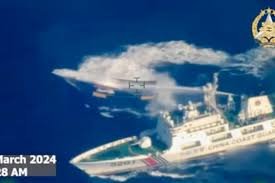
Recent reports highlight a worrying trend of escalation. From the use of powerful water cannons against Philippine resupply vessels to military-grade lasers and dangerous blocking maneuvers, the tension is no longer just diplomatic—it is physical. The area around the Second Thomas Shoal (known locally as Ayungin Shoal) has become a primary stage for these confrontations, raising fears of an accidental spark that could ignite a larger conflict.
The 2016 Landmark Ruling: Law vs. Power
The legal cornerstone of this dispute is the 2016 arbitration ruling delivered by a tribunal in The Hague. Established under the United Nations Convention on the Law of the Sea (UNCLOS), the tribunal delivered a clear verdict: China’s “historic rights” to resources in the South China Sea have no legal basis.
Despite this being a final and legally binding decision, Beijing has remained defiant. The Chinese government continues to maintain that the ruling is “null and void,” refusing to recognize the authority of the tribunal. This refusal creates a dangerous precedent where national ambition overrides international treaties ratified by over 170 countries, including China itself.
A United Front: The Global Response
The international community has not remained silent. Recently, a coalition of 14 nations—including the United States, the United Kingdom, Japan, and Australia—alongside the European Union, reasserted their support for the 2016 ruling. Their joint message is clear: destabilizing unilateral actions that threaten regional peace are unacceptable.
The primary concerns of these nations include:
- Freedom of Navigation: Ensuring that one of the world’s busiest trade routes remains open to all.
- Regional Stability: Opposing the use of coast guard and maritime militia to intimidate lawful operations.
- Safety of Personnel: Protecting fishermen and sailors from aggressive tactical maneuvers.
The Role of the United States and the Risk of Escalation
As the oldest treaty ally of the Philippines in Asia, the United States has consistently warned that it is obligated to defend Filipino forces if they come under armed attack. This security guarantee acts as a critical deterrent, but it also places Washington in a delicate position as it balances diplomacy with military readiness.
With the South China Sea serving as a vital artery for global commerce, the resolution of these disputes is not just a regional issue—it is a matter of global economic security. Whether through diplomatic negotiations or strict adherence to the Permanent Court of Arbitration guidelines, the world is watching to see if the rule of law can prevail over raw power.
Conclusion: A Fragile Peace
The ongoing standoff in the South China Sea is a reminder of the fragility of international norms. As China continues to assert its dominance and the West pushes back to maintain a “free and open Indo-Pacific,” the risk of collision—both literal and political—remains high. For the Philippines, Vietnam, and Malaysia, the struggle is for sovereignty; for the rest of the world, it is a struggle for the future of international maritime law.



