
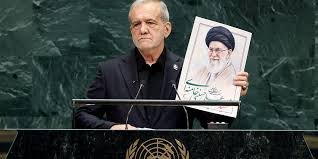
Tension Peaks: Iranian President Clashes with United States at UN General Assembly
The 81st session of the United Nations General Assembly in New York became the stage for a high-voltage diplomatic confrontation this week. In a fiery address, Iranian President Masoud Pezeshkian utilized the global platform to launch a scathing attack on the United States and Israel, framing Iran as a victim of foreign aggression while asserting that Tehran would never surrender.
A Fiery Defense and Accusations of Aggression
President Pezeshkian did not hold back, using emotional imagery—including photos of children killed in school strikes—to accuse the United States and Israel of targeting Iranian civilians. He claimed that despite the advanced military technology deployed by the West, the Iranian people remained steadfast.
“America and Israel attacked us… but we did not bend the knee. We did not bow our head,” Pezeshkian declared, vehemently denying accusations of terrorism and claiming that Iran’s actions are strictly based on self-defense.
The speech highlighted a deepening rift, with Pezeshkian specifically targeting President Donald Trump, accusing the U.S. leader of “bullying” Iran. He emphasized that while Tehran is open to diplomacy and negotiations, it will not accept a “language of force.”
Chaos Outside the UN: The “Free Iran” Protests
While the rhetoric flew inside the hall, the streets of New York City were equally charged. A massive “Free Iran” rally gathered outside the UN headquarters, with protesters denouncing the Iranian regime’s repression of women’s rights and political dissent.
The atmosphere reached a boiling point when audible boos erupted from the crowd as Pezeshkian took the stage. Notable figures, including former New York City Mayor Rudy Giuliani, joined the demonstrations, underscoring the deep animosity toward the Iranian government within the United States.
The U.S. Response: “No Credibility”
The United States government was quick to dismantle Pezeshkian’s narrative. Secretary of State Marco Rubio dismissed the Iranian president’s claims, arguing that a regime that sponsors terrorist organizations and violates human rights has no standing to lecture the world on international law.
Key points from the U.S. administration’s rebuttal include:
- n
- Terrorism Allegations: The White House accused Iran of executing acts of terrorism in the Strait of Hormuz.
- Nuclear Concerns: The U.S. remains committed to ensuring Iran does not acquire nuclear weapons to maintain global stability.
- Human Rights: Officials highlighted the Iranian regime’s history of murdering its own citizens.
What Lies Ahead for US-Iran Relations?
The conflict remains at a critical juncture. With President Trump hinting at a “big decision” regarding the future of the Islamic Republic—ranging from a potential deal to total “annihilation”—the world watches closely. The clash at the UN serves as a stark reminder that the path to peace between the United States and Iran remains fraught with distrust and ideological warfare.
As sanctions continue to press on Tehran and diplomatic channels remain strained, the resolution of this geopolitical standoff will likely define the security landscape of the Middle East for years to come.



