
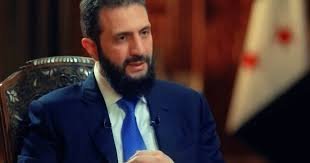
Syria’s New Direction: President Ahmed al-Sharaa Outlines Vision for Peace and Security
In a pivotal moment for the Middle East, Syrian President Ahmed al-Sharaa has shared exclusive insights into his government’s strategy for regional stability and domestic reconstruction. In a wide-ranging interview with Al Jazeera, al-Sharaa detailed a roadmap aimed at moving Syria away from decades of conflict and toward a sustainable peace.
Seeking a Security Framework with Israel
One of the most striking revelations from the interview is Damascus’s active pursuit of a security agreement with Israel. President al-Sharaa emphasized that this arrangement, involving several international mediators, is intended to act as a gateway to a comprehensive peace.
While seeking to avoid further military clashes—especially following the instability since the collapse of the previous regime in December 2024—al-Sharaa was clear about Syria’s national interests. He asserted that any security deal would not compromise Syria’s sovereign right to the Golan Heights, which remains occupied.
Addressing the Lebanese Crisis
Regional tensions often center on the border between Syria and Lebanon. However, President al-Sharaa firmly dismissed rumours of Syrian military intervention in neighbouring Lebanon. Instead, his administration is focusing on diplomatic support to help Lebanese authorities navigate their current turmoil.
Key points of the Syrian stance on Lebanon include:
- n
- State Sovereignty: Strong support for the Lebanese state to have a total monopoly on weapons.
- Stability: A belief that a collapse into chaos in Lebanon would have immediate and severe repercussions for Syria.
- Comprehensive Solutions: Moving beyond a purely security-based approach to tackle the root causes of Lebanon’s crisis.
Al-Sharaa warned that an escalation of the US-Israel conflict involving Iran could lead to a catastrophic regional fallout, urging for diplomatic restraint.
Economic Recovery and the “Terrorism List”
On the domestic front, Syria continues to struggle under the weight of international sanctions. President al-Sharaa argued that simply lifting economic sanctions is not enough to trigger a recovery. He stated that for true economic revitalization to occur, Syria must be removed from the list of state sponsors of terrorism.
This move, he suggests, is the only way to truly reintegrate Syria into the global economy and attract the investment needed to rebuild its shattered infrastructure.
Internal Governance and Human Rights
The President also touched upon the complex relationship with the Kurdish-led Syrian Democratic Forces (SDF). Although he acknowledged delays in implementing their internal agreement, al-Sharaa reaffirmed the government’s commitment to finding a successful resolution.
Perhaps most significantly for the Syrian people, al-Sharaa announced the creation of a special committee to manage the tragedy of the missing. With the United Nations estimating that 100,000 people were forcibly disappeared between 2011 and 2024, this committee aims to operate under strict international standards to provide answers to thousands of grieving families.
As Syria navigates this fragile transition, the world watches to see if these diplomatic overtures will lead to a lasting peace in one of the world’s most volatile regions.



