
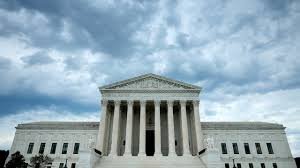
A Landmark Victory for the Second Amendment: Supreme Court Overturns Hawaii’s Carry Restrictions
In a pivotal move for firearm owners in the United States, the U.S. Supreme Court has delivered a significant blow to strict gun control measures in Hawaii. In a 6-3 decision, the Court ruled that Hawaii’s restrictive laws regarding concealed carry permits violate the constitutional rights of American citizens.
The Core of the Dispute: Wolford v. Lopez
The case, Wolford v. Lopez, centered on a controversial Hawaii state law that required concealed carry permit holders to obtain explicit permission from a property owner before bringing a firearm into a business open to the public. Essentially, this meant that unless a business owner provided verbal or written authorization—or displayed welcoming signage—lawful gun owners were prohibited from entering.
Within advocacy circles, this restrictive mandate became known as the “vampire rule,” as it essentially required an “invitation” to enter a premises, mirroring the folklore of vampires who cannot enter a home without being invited.
Why the Court Intervened
Writing for the majority, Justice Samuel Alito emphasized that the right to bear arms is not limited to the home. The Court found that Hawaii’s regime placed an undue burden on the Second Amendment, which protects the right of citizens to carry arms for self-defense during their daily routines.
Justice Alito noted that under Hawaii’s law, a law-abiding citizen could face criminal liability for simple, everyday activities, such as:
- n
- Stopping at a gas station to refuel.
- Visiting a local grocery store.
- Picking up medication at a pharmacy.
Reversing the Ninth Circuit and Following ‘Bruen’
This ruling effectively reverses a previous decision by the U.S. Court of Appeals for the Ninth Circuit. Hawaii had implemented these strict measures as a response to the landmark 2022 Bruen decision, where the Supreme Court struck down New York’s “proper cause” requirement for carry licenses.
By overturning the Hawaii law, the Supreme Court has further clarified that the constitutional right to carry a handgun for self-defense extends beyond the doorstep of one’s home and into the public sphere, provided the individual is lawfully permitted to do so.
What This Means Moving Forward
This decision reinforces the current judicial trend of expanding the interpretation of the Second Amendment. For residents of “blue states” with restrictive firearm legislation, this ruling provides a powerful legal precedent to challenge laws that hinder the practical exercise of carrying a firearm for protection.
For more official updates on judicial rulings, you can visit the Official Website of the Supreme Court of the United States.



