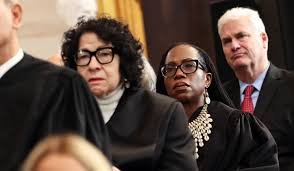
Sonia Sotomayor: A Trailblazing Journey to the Supreme Court
Sonia Sotomayor’s story is one of remarkable resilience, unwavering determination, and a profound commitment to justice. From a childhood in the Bronx to the highest court in the land, her journey is a testament to the power of education, hard work, and believing in oneself. This article delves into the life and career of the first Hispanic Supreme Court Justice, exploring the experiences that shaped her legal philosophy and her lasting impact on American jurisprudence.
Early Life and Education: A Foundation Built on Resilience
Born in 1954 in the Bronx, New York, Sonia Maria Sotomayor’s early life was marked by challenges. Raised by her single mother, Juanita, after her father’s passing when she was nine, she learned the value of perseverance and self-reliance. Her mother, a practical and determined woman, instilled in her a strong work ethic and a deep appreciation for education. Sotomayor’s upbringing in a housing project exposed her to the realities of poverty and inequality, experiences that would later inform her understanding of the law and its impact on marginalized communities.
Sotomayor excelled academically, earning a scholarship to Cardinal Spellman High School and later, a full scholarship to Princeton University. At Princeton, she felt acutely aware of being different, navigating a predominantly white and affluent environment. She graduated *summa cum laude* in 1976 and went on to Yale Law School, where she served as editor of the Yale Law Journal – a prestigious position held by few women at the time. Her time at Yale further honed her legal skills and solidified her commitment to public service. You can learn more about her early education at the [Princeton University website](https://www.princeton.edu/).
A Career Dedicated to Justice: From Prosecutor to Judge
After graduating from Yale Law School in 1979, Sotomayor began her legal career as an assistant district attorney in New York County. She quickly gained a reputation as a skilled and tenacious prosecutor, handling a variety of cases, including sex crimes and assault. However, she also began to question the fairness of the criminal justice system, recognizing the disparities in sentencing and the impact of systemic biases.
In 1992, President George H.W. Bush nominated Sotomayor to the U.S. District Court for the Southern District of New York. She served as a district judge for six years before being appointed to the U.S. Court of Appeals for the Second Circuit in 1998 by President Bill Clinton. Throughout her time on the bench, Sotomayor demonstrated a commitment to careful legal analysis, a deep understanding of the law, and a willingness to consider the real-world consequences of her decisions. Her judicial philosophy is often described as pragmatic and empathetic, focusing on the specific facts of each case and the impact on the individuals involved. The [Federal Judicial Center](https://www.fjc.gov/) provides detailed information on the federal court system.
Appointment to the Supreme Court and Lasting Legacy
In 2009, President Barack Obama nominated Sonia Sotomayor to the Supreme Court, following the retirement of Justice David Souter. Her confirmation hearings were historic, as she became the first Hispanic and the third woman to serve on the nation’s highest court. Her confirmation was a landmark moment for the Latino community and a symbol of progress in the pursuit of diversity on the bench.
As a Justice, Sotomayor has consistently advocated for the rights of the marginalized and vulnerable. She is known for her powerful dissents, which often highlight the importance of considering the lived experiences of those affected by the law. Her commitment to equal justice under the law and her unwavering belief in the power of the Constitution to protect individual rights have made her a leading voice on the Supreme Court. Sotomayor’s legacy will undoubtedly inspire future generations of lawyers and judges to strive for a more just and equitable society. You can find her official biography on the [Supreme Court website](https://www.supremecourt.gov/justices/sotomayor/).