Soaring Gas Prices: Can the Government’s Last-Minute Energy Plan Actually Lower Your Costs?
Soaring Gas Prices: Can the Government’s Last-Minute Energy Plan Actually Lower Your Costs?
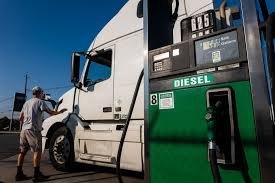
For millions of drivers, truckers, and farmers across the United States, the trip to the pump has become a source of significant financial stress. With gas prices and diesel costs reaching historic highs, the economic pressure is mounting, sparking widespread discontent and fueling political tension ahead of the midterm elections.
In a race against time, the administration has unveiled a series of aggressive policy moves aimed at quelling the anger of voters exhausted by the high cost of living. But the question remains: are these meaningful solutions or simply political band-aids?
The Agricultural Crisis: An $8 Billion Lifeline
Farmers are among the hardest hit by the surge in fuel costs. Diesel isn’t just for transport; it powers the tractors and machinery essential for food production. With national diesel prices skyrocketing from $3.76 to a peak of $6.53 per gallon, the cost of farming has reached an unsustainable level.
To combat this, the U.S. Department of Agriculture (USDA) has announced an $8 billion rescue package. This one-time payment is designed to provide relief during temporary market disruptions. However, experts warn that while the money is helpful, ad-hoc payments often fail to reach those who need them most, leaving some farmers still struggling to break even.
Controversial Strategies to Lower Fuel Costs
Beyond direct financial aid, the government is exploring “out-of-the-box”—and highly controversial—methods to bring down gas prices and diesel costs:
- n
- Russian Diesel Imports: A plan to import approximately 2.2 million barrels of diesel from Russia. Critics argue this is a “drop in the bucket,” as the US consumes nearly 4 million barrels daily.
- Red-Dyed Diesel for Truckers: An executive order allowing semi-truck drivers to use cheaper red-dyed diesel (typically reserved for off-road farm use), temporarily shielding them from certain federal highway taxes.
- The “Dark Fleet” Gambit: Energy Secretary Chris Wright has proposed cleaning up and deploying sanctioned “dark fleet” tankers to lower the exorbitant cost of shipping oil, which has seen daily rates explode from $65,000 to $1.4 million in some corridors.
The Global Reality: Why There Is No “Silver Bullet”
Despite these efforts, energy analysts are skeptical. The current volatility in gas prices is not merely a domestic policy failure but a result of a “supply chain nightmare” driven by global conflicts. The ongoing war with Iran, the Russia-Ukraine conflict, and Houthi attacks in the Red Sea have created a perfect storm for energy markets.
According to the International Energy Agency (IEA), global markets may be more than a year away from returning to normal. Bob McNally, a former energy adviser, suggests that without a durable peace deal or a significant economic recession, an immediate and drastic decline in prices is unlikely.
Final Verdict: Relief or Rhetoric?
While the administration is “looking under more rocks than most” to find solutions, the underlying problem remains structural and global. For the average consumer, these measures may provide temporary relief, but they do not solve the fundamental volatility of the energy market.
As the midterms approach, the fight over gas prices continues to be a central theme of the American political landscape, reflecting a deeper struggle with the cost of living in an unstable global economy.
📰 You May Also Like