
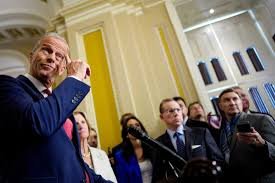
The Save America Act: A Legislative Lightning Rod
In a move that sent shockwaves through Capitol Hill, President Trump recently derailed a key bipartisan housing initiative just moments before it was set to be signed. The reason? A non-negotiable demand for the passage of the Save America Act, a strict voter ID law that has become the centerpiece of a growing power struggle within the Republican party.
This sudden pivot is not an isolated incident but rather a pattern of governance that leaves Senate leaders scrambling. By tying critical legislation—from housing affordability to national security tools—to the passage of the Save America Act, the administration is placing immense pressure on GOP lawmakers to align with the President’s vision or risk legislative paralysis.
The Clash: Trump’s “Speed of Light” vs. Senate Math
At the heart of this conflict is the relationship between President Trump and Senate Majority Leader John Thune. While the President operates at what Senator John Kennedy describes as the “speed of light” when it comes to his priorities, Thune is tasked with the sobering reality of legislative mathematics.
The friction points are clear:
- n
- Vote Shortages: Thune has repeatedly warned that there simply aren’t enough votes in a narrowly divided Senate to pass the Save America Act.
- The Filibuster Fight: Trump has pushed for the elimination of the filibuster to force the act through, a move Thune resists, fearing it would strip Republicans of their own leverage should Democrats regain power.
- Institutional Stability: Many Senate Republicans view the Senate as a deliberative body rather than a “manufacturing department” for the executive branch.
Beyond Voter ID: The Ripple Effect on National Security
The obsession with the Save America Act has bled into other critical areas of government. For instance, the reauthorization of FISA Section 702—a vital spy tool for national intelligence—lapsed after the administration pushed for an “anti-weaponization” fund to compensate January 6th rioters.
The result has been a cycle of crisis and last-minute resolutions. From the nomination of acting directors of national intelligence to agreements regarding Iran, the legislative process has become a game of high-stakes brinkmanship. For a deeper understanding of how these rules govern the chamber, you can explore the official records of the U.S. Congress.
What’s at Stake for the Midterms?
As the fall elections approach, the GOP finds itself at a crossroads. On one side, loyalists like Senator Mike Lee argue that the Save America Act is essential for the party’s survival and has widespread public support. On the other, pragmatic leaders like Thune believe the path to victory lies in “kitchen table pocketbook issues”—safety, economy, and community stability.
The tension is palpable. With some departing members feeling more empowered to push back, the unbending loyalty the President once enjoyed is beginning to fray. Whether the GOP can find unity before the midterms depends on whether they can bridge the gap between ideological purity and political viability.
The battle over the Save America Act is more than just a fight over voter ID; it is a struggle for the soul of the Republican party and the future of the American legislative process.



