
The Battle for Quebec’s Future: PLQ Takes a Stand Against Instability
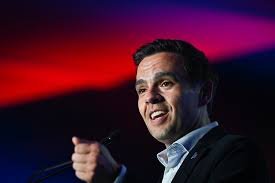
Quebec’s political arena is heating up as the province approaches a critical electoral crossroads. At a recent general council meeting, Charles Milliard, leader of the Quebec Liberal Party (PLQ), issued a stark warning: Quebec cannot afford the instability of a third referendum. In a landscape where the Parti Québécois (PQ) is currently leading in the polls, Milliard is positioning the PLQ as the party of stability and economic repair.
The Sovereignty Divide: “Repair, Not Separate”
The tension between the PLQ and the PQ is palpable. While Paul St-Pierre Plamondon continues to push for a path toward independence, Milliard argues that such a move is disconnected from the current realities of Quebecers. The Liberal leader emphasizes that the province requires a predictable economic ecosystem to prosper and fix existing systemic issues.
Interestingly, Milliard has also cast a critical eye on the Coalition Avenir Québec (CAQ), suggesting that the current government’s internal divisions regarding the “Yes” and “No” camps on sovereignty create an unpredictable environment for citizens and investors alike.
Language Laws and the Fight Over Bill 96
One of the most contentious issues in Quebec politics remains the protection of the French language. The PLQ is proposing a “better” plan to combat the decline of French—one that is less coercive than the CAQ’s Bill 96.
- Educational Freedom: The PLQ advocates for returning “free choice” to citizens regarding their choice of Cégep, regardless of the language of instruction.
- Respect for Rights: Former senator André Pratte and MNA Elisabeth Prass have voiced strong opposition to caps on English-language Cégep enrollments, arguing that adults should not be told how or where to receive their higher education.
- Inclusion: The Liberal strategy aims to protect French without making English-speaking citizens feel like “second-class citizens.”
Economic Pragmatism: The PLQ’s Roadmap to 2030
Beyond language and sovereignty, the PLQ is betting heavily on economic discipline. Charles Milliard has criticized the current government’s spending habits, describing it as a “buffet of announcements on the taxpayers’ credit card.”
To stimulate growth, the PLQ proposes several bold measures for small and medium-sized enterprises (SMEs), including:
- Tax Reduction: Lowering the SME tax rate from 11.5% to 10%.
- Regulatory Moratorium: A freeze on new regulations that increase the reporting burden on small businesses.
- Manufacturing Boost: Increasing the manufacturing sector’s share of the provincial GDP from 12% to 15%.
- Fiscal Responsibility: A firm commitment to balancing public finances by the 2029-2030 fiscal year.
Broader Canadian Context: From Alberta to Ottawa
While Quebec grapples with internal identity and economics, the rest of Canada is seeing its own tensions. In Alberta, movements for separation continue to be a point of discussion, though polling shows a decline in support. Federal Conservative leader Pierre Poilievre is expected to address these concerns in Calgary, suggesting that a shift in federal policy could soothe separatist anxieties.
Meanwhile, on the international stage, the federal government continues to strengthen ties. Prime Minister Mark Carney‘s upcoming visits to France and Ireland underscore Canada’s commitment to trade, defense, and technology partnerships, highlighting the duality of Canada’s current political climate: internal regional friction balanced by global ambition.
For more detailed analysis on Canadian federalism and provincial policies, you can visit the official Government of Canada website or follow updates from CBC News for real-time reporting on the 2024-2025 political cycle.



