
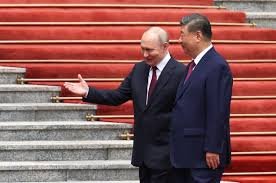
Putin in China: A Strategic Alliance to Redefine the Global Order
In a world increasingly defined by volatility, the recent meeting between Vladimir Putin and Xi Jinping in Beijing has sent a clear signal to the international community. Describing their ties as a “force of calm amid chaos,” President Xi Jinping welcomed the Russian leader during a high-stakes state visit that underscores a deepening strategic alignment designed to challenge Western hegemony.
A Calculated Power Play: Xi as the Global Broker
The timing of Putin’s visit was no coincidence. Coming just days after Xi hosted U.S. President Donald Trump, the Chinese leader has positioned himself as a premier global powerbroker. By hosting the leaders of the two nations most deeply embroiled in conflict—the United States and Russia—Xi is cementing China’s reputation as an indispensable mediator on the world stage.
While both U.S. and Russian leaders received the traditional red-carpet treatment, the optics of Putin’s visit were markedly different. The atmosphere was one of intimate friendship, highlighted by a joint statement—a diplomatic tool absent from the Trump visit—reiterating a shared vision for a “multipolar world.”
United Against U.S. Dominance
Central to the discussions in the Great Hall of the People was a shared critique of American foreign policy. Xi Jinping explicitly referenced “unilateral hegemonic currents,” a direct jab at the U.S. approach to global governance. The two leaders focused on several key points of contention:
- n
- The ‘Golden Dome’ Missile System: Both leaders denounced the U.S. plan for a multibillion-dollar missile defense project, claiming it poses a direct threat to strategic global stability.
- Middle East Stability: Xi emphasized the need for an immediate end to the US-Israeli conflict against Iran to protect global energy supplies and trade routes.
- Economic Sovereignty: A commitment to expanding coordination across trade, diplomacy, and security to reshape an order they view as unfairly dominated by the West.
The ‘No Limits’ Partnership: Reality vs. Optics
The personal chemistry between Putin and Xi remains strong. Putin even utilized a poignant Chinese idiom, “One day apart feels like three autumns,” to describe their bond. Their discussions touched upon critical sectors including energy, high-tech, agriculture, and transport, reinforcing Russia’s role as a reliable resource supplier and China as a responsible consumer.
However, beneath the ceremonial pomp lies a shifting power dynamic. Putin arrives in Beijing in a significantly weakened position compared to previous visits. With the United Nations and various global bodies monitoring the conflict in Ukraine, Russia faces severe pressure:
- Military Setbacks: Recent massive drone attacks on Moscow and the loss of territory in Ukraine have strained Russian morale and resources.
- Economic Dependency: The Russian economy is now heavily beholden to China, giving Xi significant leverage in negotiations over energy prices and strategic cooperation.
Conclusion: A New Era of Geopolitics
As China and Russia celebrate the 25th anniversary of their 2001 “Treaty of Good-Neighborliness and Friendly Cooperation,” it is clear that their alignment is no longer just a marriage of convenience, but a strategic necessity. While the U.S. continues to navigate its own domestic and foreign challenges, the synergy between Putin and Xi aims to build a world where Washington is no longer the sole superpower.
Whether this “no limits” partnership can truly withstand the pressures of global war and economic disparity remains to be seen, but for now, the axis between Beijing and Moscow is the most significant challenge to the existing international order.



