
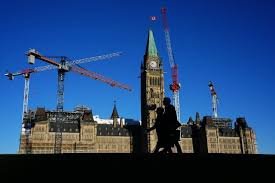
Prorogue Parliament: A Strategic Move for the Liberal Government?
The Liberal government, led by Prime Minister Mark Carney, is reportedly weighing the possibility of proroguing Parliament. This move, according to two Liberal Party sources, is being considered to gain greater control over House of Commons’ committees and facilitate the passage of legislation, particularly if the party secures victories in the upcoming three by-elections on April 13th.
Navigating a Minority Parliament
Currently, the Liberal government operates within a challenging minority Parliament. This limits their ability to dictate committee agendas and swiftly enact legislation. Committee membership is determined by party representation in the House of Commons. In a minority setting, the Liberals can be outvoted on committees by a coalition of Conservatives and Bloc Québécois, leading to delays – as seen with the recent budget implementation bill.
What Does Prorogation Entail?
Prorogation is the act of ending the current session of Parliament. It releases Members of Parliament (MPs) from their parliamentary duties, including committee assignments. Essentially, it resets the parliamentary landscape.
Official Responses and Alternative Strategies
Despite the reports, Prime Minister Carney’s Deputy Chief Staff, Braeden Caley, stated there are no current plans for prorogation, emphasizing the government’s “laser-focused” commitment to economic growth. Government House Leader Steve MacKinnon echoed this sentiment, stating Ottawa won’t prorogue as they focus on a Spring Economic Update. However, sources suggest a short prorogation following a potential by-election sweep, coupled with a new Throne Speech and a revamp of the committee system, is a viable option. Another possibility is a prorogation in September.
The By-Election Factor
A Liberal victory in all three by-elections would bring their seat count to 173 in the 343-seat House of Commons – achieving a bare majority. This would prevent the opposition from triggering a confidence vote to bring down the government. However, even with a majority, prorogation would likely be necessary to restructure the Commons’ committees.
Beyond Prorogation: Changing Standing Orders
An alternative strategy being considered is to amend the standing orders governing committee membership without resorting to prorogation. However, this approach is expected to face strong opposition from the Conservatives and Bloc Québécois, potentially leading to a filibuster to maintain the current committee structure.
Expert Insight: Don Boudria on Prorogation
Former Liberal House leader Don Boudria, a parliamentary procedure expert, believes prorogation is the most straightforward path to gaining control of committees. “Prorogation would cause the committees to be reconstructed because nobody would be a member of any committee,” he explained. He suggests prorogation followed by a motion to adjust committee proportionality before the committees are reformed.
The By-Elections and Senate Appointments
The by-elections are being held to fill vacancies left by former cabinet ministers Chrystia Freeland and Bill Blair, as well as a seat contested following a Supreme Court of Canada ruling in Terrebonne. The Liberals have recently gained support through floor-crossings from Conservative and NDP MPs, but the by-election wins are crucial for a slim majority.
Furthermore, discussions are reportedly underway to appoint the Prime Minister’s principal secretary, Tom Pitfield, to the Senate, with a mandate to expedite legislative processes. Mr. Pitfield has expressed interest in becoming Government Leader in the Senate, a position that traditionally includes a seat at the cabinet table.
Senate Reform and Coordination
The Senate finance committee recently recommended restoring the Government Leader in the Senate to the cabinet, arguing it would improve communication and legislative planning. Currently, the government’s Senate representative, Pierre Moreau, manages the legislative agenda but does not have a cabinet position.
The situation highlights the ongoing debate surrounding Senate reform and the balance of power between the two parliamentary bodies.
Sources: The Globe and Mail



