
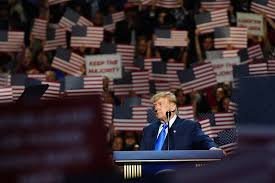
The Bold Promise: A $5,000 Windfall for US Citizens
In a move that has sent ripples through the financial and political landscapes, President Donald Trump has announced a provocative proposal: a $5,000 “dividend” for every adult American citizen. This promise, delivered during the Republican convention in Dallas, is contingent upon a Republican majority in Congress following the November legislative elections.
While the idea of a direct cash infusion is undoubtedly attractive to voters, the proposal has sparked an intense debate among economists and legal experts regarding its feasibility, legality, and potential impact on the global economy.
The Staggering Cost: Doing the Math
To understand the scale of this commitment, one must look at the numbers. With approximately 277 million adults in the United States, a universal payment of $5,000 would require a staggering expenditure. Depending on whether the payment applies to all residents or only citizens, the total cost is estimated between $1.27 trillion and $1.38 trillion.
To put this into perspective, such a payment would represent roughly 18% of the U.S. federal budget for 2025—surpassing the total annual expenditure on the U.S. military, which stands at approximately 13%.
Funding and Economic Red Flags
The President has vaguely pointed toward the use of customs duties (tariffs) to fund this initiative. However, current data suggests a significant gap between projected revenue and the required trillions. In 2025, customs duties brought in $195 billion—a fraction of what is needed. Furthermore, recent Supreme Court decisions have forced the government to refund portions of these duties to corporations, further depleting the available funds.
Economists warn of two primary risks:
- Inflationary Pressure: Injecting massive amounts of cash directly into the hands of consumers increases demand for goods and services without increasing supply. This typically leads to price hikes. With inflation already hovering around 3.4% (above the Federal Reserve’s 2% target), this move could destabilize the economy.
- Budget Deficits: With the federal deficit already reaching $2 trillion in the first 11 months of the fiscal year, this dividend would drastically widen the gap in the national balance sheet.
The Legal Gray Area
Beyond the economics, the proposal faces a legal hurdle. U.S. federal law strictly prohibits offering payments to voters to influence their vote—an offense punishable by fines and prison time. While the Trump campaign argues that the dividend is for all Americans regardless of their vote, critics question if the timing and framing of the promise cross a legal line into voter inducement.
Political Landscape: Looking Toward the Future
As the mid-term elections approach, the Republican party is consolidating its strength. While President Trump has not yet officially named a successor for the end of his second term, figures like J.D. Vance and Marco Rubio are emerging as strong contenders. The “Trump-a-palooza” atmosphere in Dallas reflects a base that remains fiercely loyal to the President’s vision, regardless of the economic skepticism from Washington’s establishment.
Whether this $5,000 dividend becomes a reality or remains a campaign talking point, it underscores a shift toward more aggressive, direct-to-citizen economic policies in the American political arena.



