
Pierre Poilievre and the Future of the Conservative Party of Canada: A Fight Against the Elite
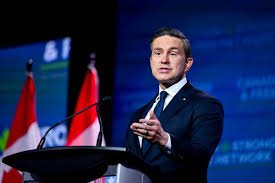
In a powerful display of resolve, Conservative Leader Pierre Poilievre recently took the stage at the annual Canada Strong and Free Network conference in Ottawa. His message was clear: he will not compromise his identity, nor will he abandon the millions of Canadians he represents in his quest to reshape the nation’s political landscape.
Poilievre’s speech served as a rallying cry for grassroots supporters, framing the current political climate as a battle between everyday citizens and a concentrated “club of Liberal elites” in Ottawa. According to Poilievre, this elite circle has constructed a system designed to reward well-connected friends and businesses, leaving the average Canadian to struggle with the consequences.
Dismantling the Illusion of the “Moderate” Liberal
One of the most contentious points of the address was Poilievre’s critique of Prime Minister Mark Carney. In recent political circles, some have suggested that Carney represents a more moderate, perhaps even conservative-leaning, version of the Liberal Party. Poilievre was quick to dismiss this notion as a strategic illusion.
“The illusion was that Mark Carney was not as woke as Justin Trudeau,” Poilievre remarked to a laughing crowd, arguing that despite a different delivery, Carney has not deviated from the established Trudeau agenda. He specifically castigated the Prime Minister for adopting conservative-sounding rhetoric—such as accelerating natural resource development—without delivering tangible results.
Facing Adversity and Maintaining Leadership
The road has not been without hurdles. Following the last election, the Conservative Party of Canada faced significant challenges, including a loss of seats and the formation of a Liberal majority government under Carney. Poilievre himself lost his seat before successfully reclaiming a position via a by-election in Alberta.
Despite the polling shifts and the loss of several MPs to the governing party, Poilievre remains steadfast. He addressed the pressure to “blend in” or join the political status quo, stating that doing so would mean betraying the 8.3 million Canadians who voted for a fighter.
Key Pillars of Poilievre’s Current Strategy:
- Anti-Elite Rhetoric: Positioning the party as the voice of the “forgotten” Canadian against the Ottawa establishment.
- Policy Consistency: Refusing to pivot toward the center if it means compromising core conservative values.
- Grassroots Mobilization: Utilizing networks like the Canada Strong and Free Network to train the next generation of activists.
A Divided Party or a United Front?
Historically, the conservative movement in Canada has been plagued by internal divisions, most notably in the late 80s and 90s before the modern party was forged in 2003. With Mark Carney successfully wooing some voters and MPs, whispers of another split have surfaced privately within the party.
However, public sentiment tells a different story. With no public challengers to his leadership and a firm commitment to his trajectory, Poilievre ended his speech with a definitive promise to his base: “I keep fighting.”
As Canada moves closer to the next federal election, the tension between Poilievre’s uncompromising approach and the Liberal majority will likely define the political discourse in the Canadian government.



