
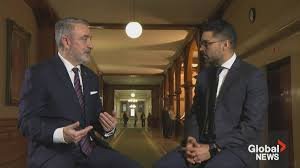
Paul Calandra and the Bill 101 Shake-up: Tension Rises Over Ontario’s Education Governance
The political atmosphere at Queen’s Park has reached a boiling point. At the center of the storm is Paul Calandra, Ontario’s Minister of Education, whose recent conduct during legislative hearings has sparked a fierce debate about democracy, respect, and the future of the province’s public schooling system.
The controversy stems from the discussions surrounding Bill 101, a piece of legislation that proposes a fundamental shift in how school boards are managed. While the government frames it as an efficiency move, critics see it as a calculated power grab.
What is Bill 101 and Why Does it Matter?
Bill 101 aims to introduce the role of a Chief Education Officer (CEO) within both English public and Catholic school boards. This isn’t just a title change; it’s a significant redistribution of power. Under this new law:
- n
- Financial Control: The CEO would have the authority to set budgets and co-sign critical decisions.
- Ministerial Oversight: While trustees may hire the CEO, only the Minister of Education—currently Paul Calandra—would have the power to terminate the position or resolve disputes.
- Reduced Autonomy: This shift effectively diminishes the role of locally elected trustees, granting the provincial government unprecedented control over local board governance.
A Clash of Titans: The Confrontation at Queen’s Park
The legislative committee meeting took an unexpected turn when Paul Calandra stepped away from the government benches to directly challenge union leaders. The exchange was far from diplomatic. Calandra began grilling witnesses, leading to accusations that his tone was “rude” and “inappropriate.”
In a particularly tense moment, Calandra questioned Joe Tigani, head of the Ontario School Boards Council of Unions, asking pointedly: “Are you a teacher? Do you think you’d be qualified to run a school board as a CEO?”
Tigani, representing 57,000 education support workers, later described the experience as wildly disrespectful, noting that the Minister’s demeanour undermined the expertise of those who keep the school system running.
The Political Backlash
The reaction from opposition MPPs was swift and scathing. Leaders from across the political spectrum expressed shock at Calandra’s aggressive approach:
- NDP Education Critic Chandra Pasma stated she had never seen a cabinet minister attack individuals who came to share their perspectives on legislation.
- Green Party MPP Aislinn Clancy emphasized that democracy requires consultation and respect, not “grilling” stakeholders to make them feel inferior.
- Liberal MPP John Fraser argued that Calandra was not defending the bill’s merits but was instead attacking the people voicing their concerns.
What Happens Next for Ontario Schools?
Despite the outcry, Paul Calandra remains steadfast. He maintains that the committee process is designed for questioning those with differing opinions and that his actions were simply part of that process. More importantly, the government indicates that Bill 101 will likely return to the legislature unchanged and is expected to pass in the coming weeks.
As the province moves toward this new governance model, the debate continues: Is this a necessary step for accountability, or is it a move that further marginalizes educators and local trustees in favour of centralized government control?
For more information on current Ontario legislation, you can visit the official Legislative Assembly of Ontario website to track the progress of Bill 101.



