
Norah O’Donnell: Unveiling the Stories of ‘We the Women’ and Championing Representation
Norah O’Donnell, a veteran journalist with a distinguished career, has interviewed some of the most influential women of our time – from Hillary Clinton and Kamala Harris to Malala Yousafzai and Dolly Parton. Yet, she found herself profoundly impacted by the gaps in her own knowledge of women’s contributions to American history. “I went to a good, big, public high school in Texas; I went to Georgetown University,” she shared. “And yet, my own understanding of women’s contribution to American history has been limited.”
This realization sparked a journey that culminated in her new book, “We the Women” (published by Ballantine Books), a powerful collection of stories about “hidden heroes” whose achievements have often been overlooked. O’Donnell describes the experience as a series of “head exploding” moments – 🤯 – as she uncovered remarkable tales of courage and innovation.
From Revolutionary Printers to Trailblazing Athletes
The book shines a light on figures like Dr. Mary Edwards Walker, the only woman to receive the Medal of Honor during the Civil War, and Congresswoman Patsy Mink, the author of Title IX, a landmark legislation that revolutionized women’s athletics. O’Donnell begins by highlighting a surprising fact about America’s founding: the first official printing of the Declaration of Independence wasn’t signed by just the Founding Fathers.
“When the founders decide they want the first official printing of the Declaration of Independence, with all the signatories’ name on it, who do they turn to? A printer in Baltimore, Mary Katharine Goddard,” O’Donnell explains. “There’s a woman’s name on the Declaration of Independence. And remember too, putting your name on the Declaration of Independence was treasonous.”
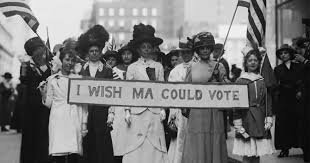
Despite these early acts of bravery, the fight for equality continued. O’Donnell recounts the story of Elizabeth Cady Stanton and Susan B. Anthony, who, denied speaking slots at the 1876 Centennial celebration, dramatically “stormed the stage” with their own “Declaration of the Rights of Women,” demanding the right to vote.
A Legacy of Progress and Persistent Challenges
It took another 44 years for women to finally secure the right to vote in 1920. O’Donnell emphasizes that even after this victory, significant barriers remained. “This is why we have to study history,” she asserts. “It was just about 50 years ago that women could open up a credit card in their own name, could get a mortgage, to have financial freedom. Women couldn’t serve on juries in all 50 states until the early 1970s.”
“We the Women” also celebrates the achievements of Babe Didrikson, the first female sports superstar; Frances Perkins, the first female cabinet member; and Constance Baker Motley, the first Black woman to argue before the Supreme Court. Motley’s story is particularly poignant, illustrating how rejection can be a catalyst for even greater achievements. Denied a leadership position at the NAACP’s Legal Defense Fund, she went on to become the first Black woman to serve on a federal bench, inspiring a young Ketanji Brown Jackson to pursue a career in law.
Championing Representation in Journalism
O’Donnell’s own career has been marked by challenges, including instances of sexism. She recalls an interview at CBS News where she was questioned about her ability to cover the White House while raising three young children – a question she doubts would have been posed to a male candidate. Despite these obstacles, she persevered, becoming the second woman to solo anchor the “CBS Evening News,” following in the footsteps of Katie Couric.
However, O’Donnell notes with concern that today, all three major network news broadcasts are anchored by men. “I don’t think it’s a good thing,” she states. “I do think there should be a woman leading one of the evening news broadcasts. I do think it’s important to have representation.”
A Hopeful Outlook for the Future
Despite the challenges, O’Donnell remains optimistic about the future. She observes a shift in attitude among younger women, who are more assertive and less likely to apologize for their ambition. “Younger women don’t apologize or wait for the men to finish speaking in a room. They just speak. They just say what needs to be done, and they do it efficiently, clearly, authoritatively, collaboratively, and then their record stands on its own. That is a sign of progress.”
Read an excerpt from “We the Women” by Norah O’Donnell: Link to Excerpt
For more information: CBS News
Story produced by Robbyn McFadden. Editor: Jason Schmidt. © 2026 CBS Interactive Inc. All Rights Reserved.



