
Iran Accuses Netanyahu, Trump, and Europe of Inciting Protests
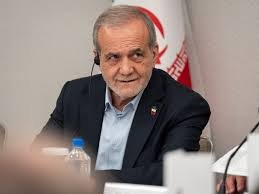
Iranian President Masoud Pezeshkian has publicly accused former United States President Donald Trump, Israeli Prime Minister Benjamin Netanyahu, and European nations of deliberately escalating tensions and “provoking” the Iranian populace during the recent wave of protests that swept across the country. These accusations come amidst heightened geopolitical tensions and ongoing scrutiny of Iran’s internal affairs.
Foreign Powers Exploited Internal Issues, Claims President
In a televised address broadcast on Saturday via Iran’s official Student News Network, President Pezeshkian stated that external actors actively sought to destabilize Iran by equipping and manipulating individuals to participate in the demonstrations. He alleged that these foreign powers aimed to sow discord, incite violence, and ultimately dismantle the nation’s social fabric.
“They equipped and brought a number of innocent people along with this movement and poured them into the streets and incited them to tear this country apart, create fights and hatred between people, and create division,” Pezeshkian asserted. He further distinguished these protests from typical demonstrations, highlighting the presence of armed individuals, attacks on security forces, and the deliberate targeting of civilian infrastructure like ambulances and markets.
A Call for Dialogue, But Firm Stance on Defense
President Pezeshkian emphasized Iran’s willingness to engage in dialogue with protesters, stating, “In any normal protest, they don’t pick up guns…we should sit with the protesters, listen to their words and concerns, and resolve them; we are ready to listen.” However, he firmly maintained that the unrest was not solely a matter of domestic grievances, but rather a calculated effort by foreign powers to exploit existing problems and divide Iranian society.
Iranian Foreign Minister Abbas Araghchi echoed this sentiment, expressing Iran’s openness to “fair and equitable” talks with the US. However, he underscored that negotiations cannot occur under the threat of military action. Crucially, Araghchi stated that Iran’s defensive and missile capabilities are non-negotiable, a clear signal of Iran’s commitment to its security.
US Sanctions and Military Posturing
The accusations from Iran come against a backdrop of escalating tensions with the United States. For weeks, former President Trump had threatened military intervention following Iran’s crackdown on the protests. A US naval strike group has been positioned in the Middle East, signaling a readiness to respond if deemed necessary. You can find more information about US-Iran relations at the U.S. Department of State website.
In response to the protests, the US Treasury Department announced sanctions against Iran’s Interior Minister Eskandar Momeni and other officials, accusing them of human rights abuses and involvement in the deaths of peaceful protesters. The sanctions also targeted individuals and entities linked to the Islamic Revolutionary Guard Corps (IRGC) and Babak Morteza Zanjani, accused of embezzling billions of dollars from the Iranian people. Notably, the Treasury Department also sanctioned digital currency exchanges associated with Zanjani, marking a new approach to targeting illicit financial activities.
Discrepancies in Death Tolls
Iranian authorities acknowledge that over 3,000 people died during the protests, claiming the majority were members of the security forces or bystanders killed by “rioters.” However, human rights organizations dispute this figure, estimating the death toll to be significantly higher, potentially reaching tens of thousands. This discrepancy highlights the challenges in obtaining accurate information and the sensitivity surrounding the events.



