
Escalating Tensions in the Middle East – Iran and Israel Exchange Strikes
The Middle East is on edge as tensions dramatically escalate between Iran and Israel. Following a series of events, including threats from former President Donald Trump regarding the Strait of Hormuz, Iran responded Sunday with missile strikes targeting cities near Israel’s main nuclear research center. These developments mark a dangerous new phase in the ongoing conflict, now entering its fourth week.
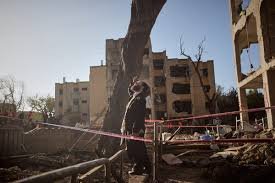
Sirens wailed across Israel as Iran launched barrages of missiles. Residents in southern Israel faced devastation in cities like Dimona and Arad. Tragically, a man was killed in northern Israel by a strike attributed to the Lebanese militant group Hezbollah. Israeli Prime Minister Benjamin Netanyahu, touring the damage in Arad, described it as a “miracle” that no one was killed, urging residents to heed siren warnings.
Trump’s Warning and Iran’s Response
On Saturday, former President Trump issued a 48-hour ultimatum to Iran, threatening to “obliterate” its power plants if Tehran fails to fully open the Strait of Hormuz. This followed Iranian missile strikes that injured dozens and damaged apartment buildings. Iran, in turn, warned that any attack on its energy facilities would be met with retaliatory strikes on U.S. and Israeli energy and infrastructure, including information technology and desalination facilities.
The Strait of Hormuz, a critical pathway for global oil flow, has seen disruptions due to attacks on commercial ships and threats of further strikes. This has led to cuts in oil output as tankers avoid the passage. Seyed Ali Mousavi, Iran’s envoy to the International Maritime Organization, stated that the strait is open to “everyone except enemies,” indicating Tehran will control vessel passage. Iran has already approved passage for ships heading to China and other Asian destinations.
Missile Strikes and Damage Assessment
Israel’s military acknowledged its inability to intercept missiles that hit Dimona and Arad on Saturday, the closest strikes to the Negev Desert nuclear center to date. This marks the first time Iranian missiles have penetrated Israel’s air defense systems in this area. Mohammad Bagher Ghalibaf, Iran’s Parliament Speaker, stated this signifies a “new phase of the battle.” At least 64 people were hospitalized following the direct hit in Arad.
Israeli National Security Minister Itamar Ben-Gvir declared Israel is in a “historic battle” against Iran, vowing to continue fighting “until victory.” While Israel maintains a policy of ambiguity regarding its nuclear capabilities, the U.N. nuclear watchdog confirmed no damage or abnormal radiation levels at the Israeli center.
International Concerns and Broader Impact
The conflict’s effects are being felt globally, contributing to rising food and fuel prices. The death toll in Iran has surpassed 1,500, according to state broadcaster reports. In Israel, 15 people have been killed by Iranian missiles, with four additional deaths in the occupied West Bank and at least 13 U.S. military members. Hezbollah claimed responsibility for a strike in northern Israel that killed a man, while a Qatari helicopter crash in the Gulf resulted in the deaths of all seven people on board, including three Turkish nationals.
The situation remains highly volatile, with ongoing concerns about a potential wider regional conflict. The international community is closely monitoring developments and urging de-escalation.
For more in-depth coverage, visit NBC News.



