
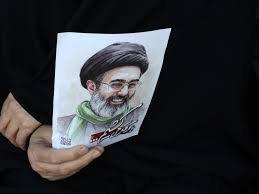
Mojtaba Khamenei Declares Victory and Seeks Reparations
In a televised statement, Mojtaba Khamenei, son of the late Ayatollah Ali Khamenei, has proclaimed a “final victory” in the recent conflict involving Israel and the United States. This declaration comes amidst a fragile ceasefire constantly threatened by ongoing Israeli offensives, particularly in Lebanon. The statement marks 40 days since the passing of Ayatollah Ali Khamenei, who was tragically killed in what is believed to be a joint US-Israeli attack at the war’s outset.
Iran’s Stance and Demands for Compensation
Khamenei, 58, who has remained largely unseen and unheard since the war began, asserted that Iran has “astonished the world” throughout the course of the conflict. While emphasizing that Tehran does not actively seek war, he firmly stated that Iran is resolutely defending its legitimate rights. He warned that those responsible for attacks on Iranian soil will not go unpunished.
“We will certainly not leave the criminal aggressors who attacked our country unpunished,” Khamenei declared. He further announced Iran’s intention to “demand compensation for all damages, as well as the blood of the martyrs and the wounded.” This demand for reparations signals a firm stance as negotiations progress.
The Strait of Hormuz and a ‘New Phase’
The strategically vital Strait of Hormuz, which Iran effectively blockaded following the war’s commencement on February 28th, remains a critical point of contention in US-Iran discussions aimed at achieving a lasting peace. Khamenei indicated that Iran will transition to a “new phase” regarding the Strait, though details remain undisclosed. This ambiguity adds another layer of complexity to the ongoing negotiations.
Ceasefire Agreement and Ongoing Concerns
A two-week ceasefire, brokered by Pakistan, was recently agreed upon by the US and Iran to facilitate negotiations. This agreement followed escalating attacks on Gulf nations and the near-closure of the Strait of Hormuz, raising fears of a prolonged and devastating conflict. As part of the ceasefire, Iran agreed to allow shipping to resume through the Strait, reportedly with the intention of imposing a toll to fund the nation’s reconstruction efforts.
However, Khamenei cautioned that Iran remains prepared to respond should the ceasefire be broken. “Our hands are on the trigger,” he stated, underscoring the nation’s readiness to defend itself. The recent devastating Israeli air strikes in Lebanon, resulting in over 300 casualties, have severely jeopardized the truce, particularly due to disagreements over whether Lebanon was included in the ceasefire agreement.
Disagreement Over Lebanon’s Inclusion
While Iran and Pakistan maintain that Lebanon is part of the deal, the US and Israel dispute this claim. This discrepancy has prompted calls from world leaders for Lebanon’s inclusion in the agreement, urging for a comprehensive and lasting peace in the region. Khamenei reiterated that while Iran did not initiate the conflict, it will not “renounce our legitimate rights under any circumstances, and in this respect, we consider the entire resistance front as a whole,” a clear reference to Lebanon and its role in the broader conflict.
Upcoming Negotiations in Pakistan
Delegations from Iran and the US are scheduled to meet in Pakistan on Saturday to continue discussions aimed at ending the war. The outcome of these talks will be crucial in determining the future of the region and the implementation of a lasting peace agreement. For further information on the geopolitical landscape, consider exploring resources from The Council on Foreign Relations.



