
A New Chapter for the Middle East: US and Iran Pave the Way for Peace
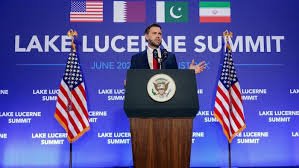
In a high-stakes diplomatic effort held at the luxurious Bürgenstock Resort Lake Lucerne in Switzerland, the United States and Iran have established what US Vice President J.D. Vance describes as “very solid foundations” for a final agreement. These talks represent a pivotal shift in Middle East diplomacy, aiming to end years of tension and move toward a sustainable peace.
Nuclear De-escalation and International Oversight
One of the most significant breakthroughs involves the restoration of international monitoring. Iran has agreed to re-invite inspectors from the International Atomic Energy Agency (IAEA), a move hailed as a major step toward definitive denuclearization.
The current framework focuses on the critical dilution of uranium stocks. By reducing uranium enrichment levels to below 5%—drastically lower than the 90% required for nuclear weaponry—both nations aim to eliminate the immediate threat of military enrichment. While some experts suggest Iran may still hold up to 400 kilograms of uranium enriched to 60%, the new protocol provides a supervised path to neutralize these risks.
Economic Relief and Sanctions Lifting
Beyond nuclear security, the negotiations have yielded substantial economic concessions for Tehran. The agreement outlines a transition toward economic stabilization, including:
- n
- Removal of restrictions on the export of oil and petrochemical products.
- Lifting of blockades that have long hampered Iranian trade.
- Unfreezing of strategic assets to provide immediate liquidity.
- Launch of a comprehensive reconstruction plan focused on Iran’s internal development.
n
n
n
n
Regional Stability: Addressing the Lebanon Conflict
The diplomacy extends beyond the bilateral relationship between Washington and Tehran. With the mediation of Qatar and Pakistan, both powers have agreed to establish a specialized conflict management cell. This unit is specifically designed to halt the clashes between Israel and the pro-Iranian Hezbollah movement in Lebanon, which had previously threatened to derail the diplomatic progress.
Furthermore, Iranian President Massoud Pezeshkian is scheduled to visit Pakistan, further solidifying the role of regional mediators in ensuring the agreement’s longevity.
The Strategic Pulse: The Strait of Hormuz
Global markets are closely watching the Strait of Hormuz, a vital artery for global energy. Despite recent threats of closure by Tehran, maritime tracking platforms like Kpler indicate that traffic remains steady. While volume is still below pre-conflict averages of 130 crossings per day, the continued flow of raw materials suggests a cautious optimism among global shipping operators.
What Comes Next?
The diplomatic journey is far from over. Technical teams from the US, Iran, Qatar, and Pakistan will continue to refine the details of the agreement. A final, binding document is expected within a 60-day renewable window, provided that the political willpower remains intact. If successful, this agreement could redefine security and economic cooperation across the entire Middle East for decades to come.



