
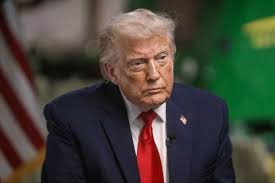
Analyzing the Heat: What Really Happened in Trump’s ‘Meet the Press’ Interview
In a high-stakes conversation with Kristen Welker on Meet the Press, President Donald Trump addressed some of the most contentious issues facing the United States today. From the volatility of Middle Eastern geopolitics to the internal frictions of the American judicial system, the interview was packed with bold assertions. However, a closer look at the data reveals a complex gap between the President’s narrative and the documented facts.
The Iran Nuclear Conflict: Total Obliteration or Nuanced Reality?
One of the most striking moments of the interview involved Trump’s claims regarding Iran. The President asserted that his decision to deploy B-2 bombers “totally obliterated” Iranian nuclear sites, claiming that without this action, half the world could have been eradicated by nuclear weapons.
The Reality Check:
- n
- Intelligence Assessments: In March 2025, then-Director of National Intelligence Tulsi Gabbard testified that US spy agencies did not believe Iran had yet decided to build nuclear weapons, though they possessed enriched uranium.
- Damage Report: While one enrichment site was heavily damaged, reports indicate that others remained operational. According to the International Atomic Energy Agency (IAEA), Iran likely still retains significant amounts of uranium enriched to 60%.
- Technical Timeline: Experts suggest that even with weapon-grade uranium, constructing a viable nuclear warhead takes months, if not over a year.
Military Might: Is the Iranian Navy Truly ‘Gone’?
Trump claimed that the Iranian Navy, Air Force, and anti-aircraft capabilities were completely “demolished” within three months. While the Pentagon confirms that approximately 90% of Iran’s conventional navy has been destroyed, the full picture is different.
The Iranian unconventional navy—consisting of small, agile “fast boats” used by the Islamic Revolutionary Guard Corps (IRGC)—remains largely intact. These forces are critical for maintaining influence over the Strait of Hormuz, making them harder to target than traditional naval vessels.
The ‘No New Wars’ Pledge vs. Current Policy
During his 2024 campaign, Trump repeatedly promised voters he would not start new foreign wars, focusing instead on an “America First” approach. However, when pressed by Welker, the President shifted his stance, stating, “I didn’t guarantee no war.” This pivot highlights a significant discrepancy between campaign rhetoric and executive action.
The Economy: Will Gas Prices Actually Drop?
Trump suggested that gas prices would plummet immediately upon the signing of a deal. However, energy experts and industry giants offer a more cautious outlook:
- Exxon Mobil: Senior VP Neil Chapman noted that rebalancing global markets would take at least four to six weeks after the reopening of the Strait of Hormuz.
- ADNOC: Sultan Al Jaber, CEO of the UAE’s state oil group, suggested that full flow levels might not return until 2027.
January 6th and the ‘Anti-Weaponization’ Fund
The interview touched upon the proposed $1.8 billion “anti-weaponization” fund intended for allies who felt targeted by the “radical left.” Trump also defended individuals involved in the January 6th Capitol riots, suggesting many were “frightened” or ushered into the building by the FBI.
Fact Check: There is no evidence that FBI agents ushered rioters into the Capitol. While a few confidential informants were present, they were not directed by the bureau to lead the breach. Furthermore, many of the most violent offenders—such as those who assaulted police—committed their crimes outside the building, contrary to the President’s implication.
The California Election Controversy
Finally, Trump claimed that recent primary elections in California were “rigged.” He pointed to the slow counting process as evidence of cheating. In reality, California’s reliance on mail-in voting (used by over 80% of voters) and laws allowing ballots postmarked by election day to be accepted a week later naturally extends the counting timeline. There is no evidence of fraud; rather, it is a reflection of the state’s established electoral laws.
For more in-depth analysis of current political events, stay tuned to our latest updates.



