
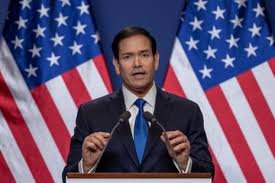
Marco Rubio Briefs Lawmakers as US Military Presence in Middle East Escalates
Senator Marco Rubio recently provided a classified briefing to key US lawmakers regarding the escalating situation in Iran, coinciding with the largest deployment of US aircraft and warships to the Middle East since the 2003 Iraq War buildup. The briefing, delivered from the White House, was attended by members of the “Gang of Eight” – senior legislators from both the House and Senate, along with chairs and ranking members of the intelligence committees. This select group receives updates on sensitive intelligence matters, including potential military actions.
This briefing follows Senator Rubio’s previous update to the group on January 5th, following the US operation in Venezuela. The developments come as the USS Gerald Ford, the world’s largest aircraft carrier, joins the growing US naval presence in the region. Analysts suggest the US is now positioned to launch a strike against Iran should President Trump authorize it.
Rising Tensions and Diplomatic Efforts
While details of the briefing remain classified, Senate Minority Leader Chuck Schumer acknowledged the seriousness of the situation, stating the administration must “make its case to the American people.” The briefing occurred just hours before President Trump’s State of the Union address, where foreign policy is expected to be a central theme.
President Trump has demanded Iran abandon its nuclear program, halt ballistic missile production, and cease support for regional proxies like Hezbollah and the Houthis in Yemen. Despite these demands, US-Iran talks are scheduled for Thursday in Geneva. Iranian Deputy Foreign Minister Majid Takht-Ravanchi expressed Iran’s willingness to reach an agreement “as soon as possible,” focusing solely on the nuclear program – a point likely to fall short of White House expectations.
President Trump has issued a ten-day ultimatum, warning of “really bad things” for Iran if a deal isn’t reached. The US has also evacuated non-essential personnel from its embassy in Lebanon due to heightened security concerns. Furthermore, Senator Rubio reportedly postponed a meeting with Israeli Prime Minister Benjamin Netanyahu until Monday, according to Israeli officials.
Military Considerations and Potential Consequences
Concerns are growing regarding the potential strain a conflict with Iran could place on US military resources. Reports suggest General Dan Caine, Chair of the Joint Chiefs of Staff, warned President Trump that a conflict could severely deplete US stockpiles of anti-missile systems, including Patriot, THAAD, and ship-launched interceptors. President Trump refuted these reports, asserting that General Caine believes a military engagement with Iran would be “easily won.”
The ultimate decision regarding a potential strike against Iran remains undecided, pending the outcome of the Geneva talks. The US delegation will be led by Steve Witkoff, a longtime friend and Middle East envoy, and Jared Kushner, the President’s son-in-law. Key advisors accompanying them include Vice President JD Vance, Secretary of State Marco Rubio, CIA Director John Ratcliffe, Defense Secretary Pete Hegseth, White House Chief of Staff Susie Wiles, and Director of National Intelligence Tulsi Gabbard.
Potential responses range from a limited strike aimed at influencing negotiations to a larger offensive targeting the Iranian government. Retired Air Force General Charles Wald suggests the arrival of the USS Gerald Ford provides added protection for Israel against potential Iranian retaliation. He also warns that failing to act after establishing a “red line” could be more damaging than the inaction surrounding Syria’s chemical weapons use.
Further Reading: Council on Foreign Relations – Iran



