
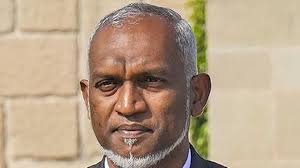
A Strategic Leap Toward Financial Sovereignty
In a significant move to reshape the nation’s economic future, Maldives President Mohamed Muizzu announced on May 11, 2026, that the Maldives has officially settled a $50 million treasury bill payment to India. This strategic financial decision is part of a broader effort to aggressively reduce the country’s external debt burden and ensure long-term fiscal stability.
For years, the Maldives has relied on financial support from India to bridge budget gaps. This specific debt was facilitated through the State Bank of India (SBI), which subscribed to treasury bills (T-bills) issued by the Maldivian government. While these instruments provided immediate liquidity, they also created a lingering financial obligation that the current administration is now determined to resolve.
Breaking the Cycle: Escaping the “Debt Trap”
President Muizzu has been vocal about the challenges inherited from previous administrations. During a recent press conference, he revealed that the $50 million T-bills were originally issued in 2019. Instead of being repaid upon maturity, the previous government requested annual rollovers, effectively delaying the payment and increasing the financial pressure on the state.
To combat this, the current administration has implemented a structured repayment plan:
- n
- January 2024: The first $50 million treasury bill was successfully repaid.
- May 11, 2026: A second $50 million settlement was completed.
- September 2026: A final T-bill is scheduled for repayment.
By adhering to this timeline, President Muizzu stated that his government is saving the Maldivian people from a $150 million “debt trap” established by prior leadership, signaling a shift toward more sustainable economic management.
What are Treasury Bills (T-Bills)?
For those unfamiliar with the terminology, Treasury Bills are short-term government debt instruments. They allow governments to raise immediate funds from investors to cover short-term financing needs. In the case of the Maldives, India provided emergency financial assistance by allowing the SBI to subscribe to these bills, often offering interest-free rollovers to ease foreign exchange pressures.
Managing sovereign debt is a delicate balance. According to the International Monetary Fund (IMF), sustainable debt management is crucial for small island nations to maintain economic resilience against global market volatility.
Looking Ahead: The Future of Maldives-India Relations
While the focus of this move is financial independence, it also reflects the evolving diplomatic landscape between Male and New Delhi. By settling its debts, the Maldives aims to enter a new era of partnership based on equity and financial autonomy rather than dependency.
As the September payment approaches, the world will be watching to see how this newfound fiscal discipline impacts the Maldivian economy and its standing in the South Asian region.



