
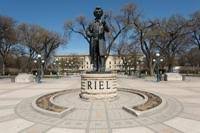
While many Canadians enjoy a welcome long weekend in February, the story behind Louis Riel Day remains surprisingly elusive. A simple Google search doesn’t fully reveal the complex history of how this civic holiday came to be enshrined by the Manitoba provincial government.

The Louis Riel statue, a prominent fixture at the Manitoba Legislative Building, serves as a lasting symbol of the man whose name became the focal point of political controversy surrounding the February holiday. As Winnipeg journalist Marty Gold notes in The Winnipeg Sun, the holiday’s origins are steeped in political maneuvering.
A History Rooted in Politics
The decision to name the holiday after Louis Riel wasn’t simply about honouring a historical figure. Many believe it was a calculated political move by the Doer government to bolster their electoral chances. This raises a broader question: if governments readily change names of public sites deemed controversial, why hasn’t Riel’s name been reconsidered, given his historically divisive legacy?
The removal of names like Bishop Grandin demonstrates a willingness to address controversial figures. Why, then, does Riel’s name remain? For many Manitobans, the holiday is still informally known as “Family Day,” reflecting a desire for a more universally palatable name.
Beyond the Holiday: Broader Political Context
The debate surrounding Louis Riel Day also highlights inconsistencies in the City of Winnipeg’s political stances. For example, the City’s opposition to the federal gun buyback program contrasts with its acceptance of exceptions for supervised consumption services, claiming a lack of involvement despite these services falling under their jurisdiction.
Furthermore, the ongoing collaboration between Canadian and American forces through NORAD exemplifies a strong alliance focused on collective security. As highlighted by diplomatic discussions, this integration is a cornerstone of North American defence.
Despite economic challenges, Winnipeg is experiencing a surge in housing starts, with a 12% increase – the second-highest in the city’s history – indicating a push for increased housing availability. This development, however, doesn’t overshadow the underlying debate surrounding the holiday’s name and its historical implications.
The story of Louis Riel Day is more than just a long weekend; it’s a reflection of Manitoba’s complex history, political landscape, and ongoing conversations about identity and remembrance. It’s a reminder that even seemingly simple civic holidays can be deeply intertwined with broader societal debates.



