
Violent Protests Erupt in Pakistan Following Death of Ayatollah Khamenei
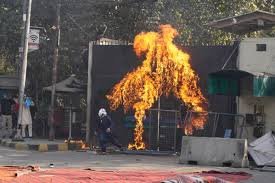
KARACHI, Pakistan (AP) — Pakistan experienced a day of intense unrest on Sunday, as protests erupted across the country following the death of Iranian Supreme Leader Ayatollah Ali Khamenei. Violent clashes between demonstrators and security forces in Karachi and northern regions resulted in at least 22 fatalities and over 120 injuries, as protesters attempted to storm a U.S. Consulate. The unrest underscores the deep emotional response to Khamenei’s death and the complex geopolitical dynamics in the region.
Escalating Violence and Casualties
The violence began as demonstrators, largely supportive of the Iranian government, attempted to breach the U.S. Consulate in Karachi. Authorities report at least 50 people were wounded in Karachi, with some in critical condition. President Asif Ali Zardari expressed “profound sorrow” over Khamenei’s death, extending condolences to Iran and affirming Pakistan’s solidarity with the Iranian people.
In the Gilgit-Baltistan region, clashes between protesters and police resulted in 12 deaths and over 80 injuries. Demonstrators targeted offices of the U.N. Military Observer Group and the U.N. Development Programme (UNDP), expressing outrage over the U.S. and Israeli involvement in Khamenei’s death. Government officials confirmed that all staff at the targeted U.N. organizations were safe, and troops were deployed to regain control of the situation.
Lahore at the Center of Protests
Lahore, the capital of Punjab province, witnessed repeated clashes between protesters and police near the U.S. Consulate. Demonstrators chanted anti-U.S. slogans and attempted to reach the consulate, met by a heavy deployment of police and paramilitary forces. The city became a focal point for expressions of grief and anger over Khamenei’s passing.
U.S. Embassy Issues Advisory
The U.S. Embassy in Pakistan issued a statement on X (formerly Twitter) monitoring the demonstrations at U.S. Consulates in Karachi and Lahore, as well as potential protests at the Embassy in Islamabad and the consulate in Peshawar. U.S. citizens in Pakistan were advised to stay informed, avoid large gatherings, and ensure their travel registration with the U.S. government is up-to-date. You can find more information on travel advisories at the U.S. Department of State website.
Nationwide Response and Security Measures
Beyond Karachi and Gilgit-Baltistan, protests also occurred in Islamabad, Peshawar, and Multan. In Islamabad, police used tear gas and batons to disperse protesters attempting to march towards the U.S. Embassy. Similar tactics were employed in Peshawar to prevent demonstrators from approaching the U.S. Consulate. A peaceful rally was held in Multan, with participants chanting slogans against Israel and the United States.
Interior Minister Mohsin Naqvi appealed for calm, acknowledging the grief shared by Pakistanis over Khamenei’s death but urging peaceful expression of protest. The Sindh provincial government echoed this call for peaceful demonstrations. Authorities have increased security around U.S. diplomatic facilities nationwide to prevent further violence.
The events highlight the sensitivity surrounding regional conflicts and the potential for unrest in response to significant geopolitical events. The situation remains fluid, and authorities are working to maintain order and prevent further escalation.



