
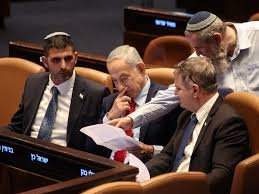
The Brink of Collapse: Understanding the Current Turmoil in the Knesset
The Israeli political landscape is currently facing a seismic shift. Prime Minister Benjamin Netanyahu, the longest-serving leader in Israel’s history, finds himself at a critical crossroads as his right-wing coalition begins to fracture from within. The central point of this tension? The Knesset, Israel’s unicameral parliament, where a pivotal vote has recently set the stage for potential early elections.
A Historic Vote to Dissolve Parliament
In a striking display of instability, Israeli lawmakers have voted to advance a bill that would effectively dissolve the Knesset. The preliminary reading saw an overwhelming majority, with 110 out of 120 lawmakers voting in favour of the motion. This suggests a widespread desire for a political reset, regardless of party affiliation.
If the bill passes through the subsequent committee and the three required parliamentary readings, it could trigger a general election within 90 days. With the legislative session ending on October 27, the window for these elections is narrowing rapidly.
Why the Coalition is Crumbling
The pressure on Netanyahu isn’t coming from the opposition alone; it is erupting from his own allies. The primary drivers of this instability include:
- n
- The Ultra-Orthodox Divide: Ultra-Orthodox parties are accusing Netanyahu of failing to protect their community from mandatory military service, a key promise made during the coalition’s formation.
- Opposition Strategy: Seeing a window of opportunity, various opposition parties have introduced their own bills to dissolve the Knesset, accelerating the government’s decline.
- Internal Fatigue: Even coalition chairman Ofir Katz has admitted that the current government “has completed its days,” despite claiming a legacy of passing 520 laws and nine budgets.
A Leader Under Siege: War and Legal Battles
This political crisis does not exist in a vacuum. Netanyahu is navigating one of the most volatile periods in the region’s history. Israel remains engaged in intense conflicts across multiple fronts, including Gaza, Lebanon, and Iran.
Many citizens hold the Prime Minister accountable for the security failures surrounding the October 7, 2023, attacks. Critics, such as Yair Golan of the Democrats party, have explicitly labeled these potential elections as the “October 7 elections,” aiming to remove a government they describe as negligent.
Furthermore, Netanyahu continues to battle a long-running corruption trial. Reports suggest that President Isaac Herzog is mediating discussions regarding a potential plea deal, which could result in the 76-year-old leader retiring from political life entirely.
What Happens Next?
The bill now moves to the committee stage to determine the specific date for the vote. For those following international relations and the Middle East geopolitical climate, the outcome of this process will likely dictate the future of Israeli diplomacy and its approach to the ongoing war.
Whether Netanyahu can maneuver his way out of this crisis or if the Knesset will officially dissolve remains the most pressing question in Israeli politics today.



