
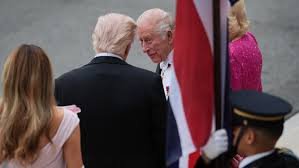
The Great Irony: A King Lecturing a Republic on Democracy
In a twist of historical irony that few could have predicted, King Charles III recently visited the United States, a nation born from a bloody revolution to escape the rule of the British Crown. As the U.S. prepares to celebrate 250 years of its republic, it was the British monarch who stepped forward to deliver a poignant lesson on the foundations of democracy.
This visit marked a rare occurrence; it had been 163 years since a British sovereign last set foot on American soil, the last being George VI in 1939. Speaking before the members of the U.S. Congress, King Charles III highlighted the shared values that bind the two nations, reminding the audience that the American Bill of Rights was deeply influenced by England’s Declaration of Rights of 1689 and the legendary Magna Carta of 1215.
The Pillars of Stability: Rule of Law and Justice
The King received a standing ovation when he emphasized that both the United Kingdom and the United States are built upon the primality of the law. According to the monarch, the essence of a functioning society relies on:
- n
- Stability and Clarity: Clear rules that apply to everyone equally.
- Judicial Independence: A court system capable of resolving disputes and rendering impartial judgments.
- Common Values: A shared commitment to the cause of liberty and human rights.
A Stark Contrast: Political Turmoil in the U.S.
While the King spoke of impartiality and the rule of law, the reality on the ground in Washington appeared to tell a different story. Mere minutes after the speech, the Department of Justice announced new criminal charges against former FBI Director James Comey. The catalyst? A photograph of seashells on a beach that some interpreted as a coded threat against Donald Trump.
Critics argue that this move, pushed by the President, represents a severe violation of the separation of powers—the very principle King Charles III was praising. Furthermore, the FCC’s investigation into ABC following complaints from Melania Trump regarding a Jimmy Kimmel monologue suggests a worrying trend of using state power to intimidate independent voices in the media.
The Subtle Art of Royal Diplomacy
King Charles III, possessing no real political power, avoided a direct confrontation with the Trump administration. Instead, he employed the subtle art of diplomacy. While appearing to honor the President, the King wove essential messages into his discourse, focusing on:
- n
- The duty of compassion and the spirit of generosity.
- The urgent need for the promotion of peace globally.
- The vital importance of the transatlantic alliance between Europe and North America.
By stating that “the words of the United States count,” the King indirectly reminded the world of the responsibility that comes with global leadership, contrasting the current administration’s erratic rhetoric with the historical weight of American diplomacy.
Final Reflections: A Republic Acting Like a Monarchy?
The ultimate irony of the discours roi charles iii (King Charles III’s speech) is that a man who wears a crown by birthright warned Americans—without saying it explicitly—that their own leader was behaving like an autocrat. The U.S. republic was created in 1776 to dismantle the absolute power of a king, yet today, many fear the return of that very same absolute power under a different name.
For more information on the historical foundations of the monarchy and its evolution, you can visit the Official Website of the British Royal Family.



