
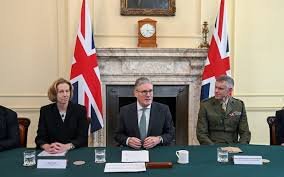
Keir Starmer: A Rising Force in British Politics
Keir Starmer, the current Leader of the Labour Party, has rapidly become a prominent figure in British politics. His trajectory from a barrister specializing in human rights to the potential next Prime Minister of the United Kingdom is a compelling story of ambition, strategic maneuvering, and a commitment to reshaping the political landscape.
Early Life and Career
Born in 1962, Keir Starmer’s early life was marked by a strong emphasis on education and public service. He attended Reigate Grammar School and later studied law at the University of Leeds, followed by a Bachelor of Civil Law at Oxford University. He qualified as a barrister in 1987 and spent much of his career focusing on human rights and public law, representing clients in high-profile cases. This background significantly shaped his political outlook and commitment to social justice.
Entry into Parliament and Rise Through the Ranks
Starmer entered Parliament in 2015 as the Member of Parliament (MP) for Holborn and St Pancras. He quickly established himself as a capable and articulate voice within the Labour Party. He held several shadow cabinet positions, including Shadow Secretary of State for Brexit, where he played a key role in shaping Labour’s response to the UK’s departure from the European Union. His nuanced approach to Brexit, seeking a closer relationship with the EU than the Conservative government pursued, resonated with many voters.
Leadership of the Labour Party
In April 2020, Keir Starmer was elected Leader of the Labour Party, succeeding Jeremy Corbyn. He inherited a party deeply divided after years of internal strife and electoral defeats. Starmer’s leadership has been characterized by an attempt to reposition Labour as a credible alternative government, focusing on issues such as economic inequality, climate change, and public services. He has worked to distance the party from the perceived extremes of the Corbyn era, aiming for a more centrist and pragmatic approach.
Key Policies and Vision for Britain
Starmer’s policy platform centers around several key themes. He advocates for a stronger economy that benefits working people, with a focus on fair wages, skills training, and investment in green technologies. He has also pledged to strengthen the National Health Service (NHS), improve education, and tackle the climate crisis. A core tenet of his vision is a commitment to social justice and reducing inequality across the UK. You can find more details on his policies at the official Labour Party website: https://www.labour.org.uk/
Challenges and Future Prospects
Despite the progress made under his leadership, Starmer faces significant challenges. The Conservative Party remains a formidable opponent, and Labour needs to regain the trust of voters in key battleground constituencies. The political landscape is constantly evolving, and Starmer must navigate complex issues such as the cost of living crisis, the war in Ukraine, and the ongoing impact of Brexit. However, with a general election looming, Keir Starmer is well-positioned to make a strong case for a Labour government and offer a different vision for Britain. For further analysis, consider reading reports from the Institute for Government.



