
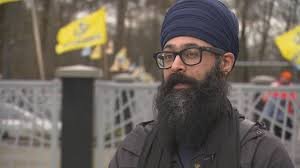
As Prime Minister Mark Carney embarks on trade talks with India, a Canadian Sikh leader, Moninder Singh, head of the Sikh Federation of Canada, has been warned by Vancouver Police about a “credible threat” to his life. This incident underscores a growing concern about foreign interference and its impact on Canadian citizens.
The warning, delivered on Sunday, stemmed from a confidential informant and extended to Singh’s family. While police remain tight-lipped due to an ongoing criminal investigation, Singh believes this is the latest attempt by the Indian government to silence its Canadian opponents. This follows a similar “Duty to Warn” notice in 2022 to both Singh and Hardeep Singh Nijjar, who was tragically gunned down the following year, allegedly at the behest of the Indian government.
A History of Concerns
The RCMP has previously linked threats against Canadian activists to the Indian government. Singh suspects he’s being targeted due to his outspoken criticism of human rights in India and his advocacy for the Khalistan movement, which supports independence for India’s Sikh-majority Punjab. He alleges India utilizes criminal syndicates and gangs within Canada to carry out these actions, effectively outsourcing political assassinations.
This situation is further complicated by Carney’s efforts to diversify Canada’s trade partners, particularly in light of unpredictable tariffs from the U.S. However, national security officials have raised concerns about India’s involvement in foreign interference, disinformation, and transnational repression within Canada. The RCMP believes the Indian government collaborated with the Bishnoi gang in Nijjar’s murder, and the FBI uncovered a similar plot against Canadian lawyer Gurpantwant Singh Pannun in New York.
Diplomatic Fallout and Accusations
These revelations led to the expulsion of six Indian diplomats from Canada in October 2024. National Security Advisor Nathalie Drouin testified that Indian diplomats and agents were engaged in “clandestine activities,” collecting information on Indo-Canadians and directing criminal activities through Lawrence Bishnoi’s organized crime network. The RCMP report indicates the Bishnoi gang was “acting on behalf of the Indian government.”
Canada’s foreign interference inquiry also identified India as the “second most active country engaging in electoral foreign interference in Canada.” Despite these accusations, New Delhi consistently denies involvement and places the onus of proof on Canada. Indian High Commissioner Dinesh Patnaik maintains that India requires evidence before taking action, and counters that Canadian agencies accuse India of supporting separatist movements.
The situation has left many Canadian Sikhs feeling betrayed, particularly as trade talks with India proceed without addressing these underlying security concerns. Moninder Singh argues that deepening ties with India without accountability is a “slap in the face” to the Sikh community. The Canadian Security Intelligence Service (CSIS) annual report further highlighted the escalation of India’s repression efforts against the Khalistan movement and its intent to target individuals in North America.
The ongoing tensions raise critical questions about balancing economic interests with national security and protecting the safety of Canadian citizens. The case underscores the complex challenges faced by the Justin Trudeau government in navigating its relationship with India and addressing concerns about foreign interference. The situation demands a careful and comprehensive approach to ensure the safety and security of all Canadians while upholding the principles of sovereignty and international law. You can find more information on Canada-India relations at Global Affairs Canada.



